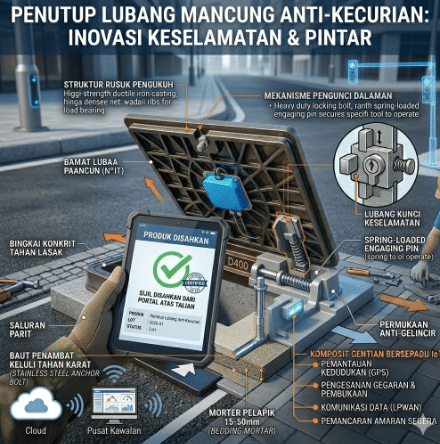
The integrity of urban infrastructure is fundamentally anchored by the quality and reliability of its access points. Manhole covers, though often perceived as simple cast iron disks, represent highly engineered safety components designed to protect both the subterranean utility networks and the vehicular traffic that traverses them. In the contemporary procurement landscape, the verification of manhole cover certifications is not merely an administrative exercise; it is a critical safeguard against catastrophic structural failure, public liability, and high-stakes litigation. As global supply chains become increasingly complex, the prevalence of counterfeit documentation and non-compliant products has reached a level that demands professional-grade scrutiny from municipal engineers, contractors, and asset managers. This report provides an exhaustive analysis of the methodologies required to authenticate the certifications of manhole covers, spanning international standards such as EN 124, AASHTO M306, and ISO 1083, while integrating advanced digital verification tools and risk-mitigation strategies.
Global Regulatory Context and Fundamental Standards
The standardization of access covers is a prerequisite for ensuring that infrastructure components can withstand the rigorous demands of modern urban environments. The primary framework governing these products in the European Economic Area and many international markets is the EN 124:2015 series. This standard represents a significant evolution from the legacy 1994 version, transitioning from a single document to a multi-part suite that addresses the diversification of materials used in modern manufacturing. The EN 124:2015 standard is divided into six material-specific sections: Part 1 for general principles, Part 2 for cast iron, Part 3 for steel and aluminum, Part 4 for reinforced concrete, Part 5 for composite materials, and Part 6 for plastics such as PP, PE, and PVC-U. Verification begins with ensuring that the product offered aligns with the specific part of the standard relevant to its material composition.
In the North American market, the American Association of State Highway and Transportation Officials (AASHTO) provides the M306 standard, which is the benchmark for drainage, sewer, and utility castings subjected to traffic. AASHTO M306 is recognized for its stringent proof-load requirements, which incorporate a 2.5 safety factor over the design load—a higher threshold than many equivalent international standards. Furthermore, ASTM A48 and ISO 1083 serve as the metallurgical foundations for gray and ductile iron respectively, specifying the chemical and mechanical properties required to ensure long-term durability. Understanding these overlapping frameworks is the first step in a professional verification workflow, as it allows the evaluator to identify whether the certification presented is appropriate for the jurisdiction and the specific application.
| Standard Series | Jurisdictional Influence | Primary Material Scope | Key Compliance Feature |
| EN 124:2015 | Europe, Middle East, Asia | Multi-material (Iron, Steel, Composite) | 6-Part granular material specification |
| AASHTO M306 | North America (USA, Canada) | Iron (Gray and Ductile) | 2.5x safety factor for traffic loads |
| ISO 1083 | International | Ductile Iron (Spheroidal Graphite) | Specific metallurgical nodularity standards |
| ASTM A48 | North America | Gray Iron Castings | Tensile strength grading (Class 20-60) |
The Load Rating Hierarchy and Technical Specification
The core of manhole cover verification is the load classification. Selecting a cover with an inadequate load rating is a primary cause of premature failure, which can lead to hazardous conditions for pedestrians and vehicles. The EN 124 standard utilizes a classification system from A15 to F900, based on the kilonewtons (kN) of force the cover is tested to withstand. A15 covers (15kN) are strictly for pedestrian areas, while D400 (400kN) is the industrial standard for main carriageways and highways. For extremely heavy-duty applications such as airport taxiways or docks, E600 and F900 classes are mandatory.
AASHTO M306 employs a different nomenclature, primarily H-20 and HS-20 for standard highway traffic, which represents a 16,000-pound wheel load. When verifying these ratings, a professional must scrutinize the “Proof Load Test” results. Under AASHTO M306, a 40,000-pound proof load must be applied to a 9-by-9-inch area at the center of the cover. The cover must sustain this load for at least one minute without showing any cracks or permanent deformation exceeding 3.2 mm (1/8 inch). The verification process involves checking the testing report to confirm that the platen size, load application rate, and duration of the test were strictly adhered to according to the referenced standard.
| EN 124 Class | AASHTO Equivalent (Approx) | Test Load | Typical Installation Area |
| A15 | N/A | 15 kN (1.5 Tons) | Gardens, private patios, footpaths |
| B125 | Light Duty | 125 kN (12.5 Tons) | Driveways, car parks, pedestrian zones |
| C250 | Medium Duty | 250 kN (25 Tons) | Curb channels, road shoulders |
| D400 | H-20 / HS-20 | 400 kN (40 Tons) | Main roads, highways, industrial yards |
| E600 | H-25 / HS-25 | 600 kN (60 Tons) | Docks, loading areas, high-stress sites |
| F900 | Heavy Duty | 900 kN (90 Tons) | Airports, military bases, extreme loads |
Documentary Evidence: Navigating COC, MTR, and EN 10204
The verification of a manhole cover is only as strong as the documentation supporting it. Procurement professionals must distinguish between three primary types of documents: the Certificate of Conformity (COC), the Mill Test Report (MTR), and the EN 10204 Inspection Documents. A COC is essentially a manufacturer’s declaration that the product meets the order requirements. While useful, it lacks the empirical data required for high-risk infrastructure projects. In contrast, an MTR (or Mill Test Certificate – MTC) provides specific chemical and mechanical results from the production batch, including tensile strength, yield strength, and elongation percentages.
The most professional standard for documenting these results is EN 10204, which defines four levels of inspection. Type 3.1 is the industry standard for high-quality manhole covers, where the results are validated by the manufacturer’s authorized inspection representative, who must be independent of the manufacturing department. Type 3.2 is the “gold standard” of certification, requiring an independent third-party inspector (e.g., SGS, Bureau Veritas, or BSI) to witness the tests and co-sign the certificate. When verifying a Type 3.2 certificate, the presence of two separate stamps and signatures—one from the manufacturer and one from the independent inspector—is a mandatory verification point.
| EN 10204 Type | Document Title | Verification Level | Signatory Requirements |
| Type 2.1 | Declaration of Compliance | Low | Manufacturer’s representative |
| Type 2.2 | Test Report | Low/Medium | Manufacturer’s rep (typical values) |
| Type 3.1 | Inspection Certificate | Medium/High | Independent internal QC officer |
| Type 3.2 | Inspection Certificate | Very High | Manufacturer + Independent 3rd Party |
Metallurgical Integrity: Gray Iron vs. Ductile Iron
A critical aspect of certification verification involves the material composition of the casting. Traditionally, manhole covers were made of gray iron (standardized under ASTM A48), which is valued for its compressive strength and vibration damping but is inherently brittle. Modern infrastructure projects increasingly mandate the use of ductile iron (also known as spheroidal graphite iron, standardized under ISO 1083). The “ductility” of this material allows it to deform under extreme stress without catastrophic shattering, a vital safety feature for highway covers.
Verification of ductile iron quality requires a review of the “Nodularity” and mechanical properties on the MTR. Ductile iron contains magnesium-treated carbon spheres (nodules) which must be verified through microscopic analysis. On the MTR, look for elongation values—ductile iron typically exhibits elongation percentages of 5% to 15%, whereas gray iron has virtually zero elongation. If a supplier provides a certificate for “Cast Iron” but the load requirements are for heavy-traffic D400, a professional must verify that the material is indeed ductile iron, as gray iron frequently fails the fatigue and impact tests required for high-volume vehicular areas.
Digital Verification Strategies: IAF CertSearch and Certification Directories
The rise of high-quality forgeries has necessitated the use of digital validation tools. The International Accreditation Forum (IAF) maintains the CertSearch global database, which is the definitive resource for verifying accredited certifications. Professionals should enter the certificate number or the company name into the IAF CertSearch engine to confirm that the certification body (CB) is accredited by a recognized national body (such as UKAS in the UK or ANAB in the USA). If a certificate does not appear in this database, it may be a “private” or unaccredited certificate, which carries significantly higher risk.
Furthermore, major third-party certifiers maintain their own online portals for certificate validation. BSI (British Standards Institution) provides a Verification Directory for its Kitemark licenses, while TÜV Rheinland utilizes the Certipedia system. These systems allow users to verify the “Scope of Certification”—ensuring that the certificate actually covers the specific manhole cover models being purchased and hasn’t been repurposed from a different product line. A common red flag is a valid ISO 9001 (Quality Management) certificate being presented as proof of product compliance; a professional must ensure they are viewing a product-specific certification (e.g., EN 124 product mark) rather than just a general company management system certificate.
| Verification Portal | Host Organization | Primary Search Data | Best For |
| IAF CertSearch | International Accreditation Forum | Cert Number / Company Name | Accredited ISO & System Certs |
| BSI Verify | British Standards Institution | Kitemark License Number | BSI Kitemarked Products |
| Certipedia | TÜV Rheinland | 10-digit ID Number | TÜV Certified Products & Features |
| SGS Directory | SGS | Report Number / Supplier Name | Testing & Audit Verification |
| Intertek Directory | Intertek | ETL/Tick Mark Number | Safety & Performance Marks |
Identifying Fraud and Counterfeit Documentation Red Flags
Detecting fraudulent certifications requires a keen eye for administrative inconsistencies. Forgers often use “Certificate Mills”—organizations that sell paper certifications without conducting real audits or tests. A major red flag is the “Instant ISO” or “2-week certification” guarantee, as legitimate product certification to EN 124 typically requires several months for initial testing, facility audits, and surveillance setup. Another common tactic is the “Legal Entity Mismatch,” where a certificate is held by a parent company or a different subsidiary than the one listed on the shipping documents.
Technical red flags on a certificate include blurred logos, inconsistent font types between fields, and “too-perfect” document condition for a certificate that is several years old. The scope statement on the certificate must be precise; for example, “Manufacture of manhole covers to EN 124-2:2015” is a valid scope, whereas “Metal fabrication and assembly” is too vague for product compliance. Additionally, every legitimate certificate should list an expiry date; if the document is expired or if the surveillance audit dates are missing, the certification is no longer valid and the supplier should be disqualified.
Physical Product Markings: The Link Between Paper and Metal
Verification is not complete until the physical product is inspected and cross-referenced with the documentation. Standard EN 124 mandates specific “Mandatory Markings” that must be cast or durably engraved on both the cover and the frame. These markings are the physical evidence of the certification claim. A non-compliant cover often lacks these markings or presents them in a way that can be easily obscured or removed.
The mandatory markings must include:
- The reference standard (e.g., EN 124-2).
- The load class (e.g., D400).
- The name and/or identification mark of the manufacturer.
- The factory of manufacture (which may be in code).
- The date or week and year of manufacture.
- The mark of the independent certification body (if applicable).
One of the most powerful verification links is the “Heat Number” or “Cast Number”. This unique alphanumeric code is cast into the iron during the melt. Professionals must verify that the heat number on the physical cover matches the heat number on the provided MTR. This ensures that the test results in the report actually correspond to the specific piece of metal installed on the road. If the heat number is missing or does not match the documentation, the chain of traceability is broken, and the material’s properties cannot be guaranteed.
Liability and the High Cost of Verification Failure
The consequences of failing to verify manhole cover certifications extend far beyond procurement delays. In the event of a structural collapse, the entity responsible for maintaining the roadway (often a municipality or utility company) can be held liable for personal injury or death. Case studies show that loose or unsecured manhole covers on high-speed roads can become lethal projectiles, launched into the air by passing vehicles and crashing through the windshields of following cars. In Chicago, thousands of complaints regarding loose manhole covers have highlighted the systemic risk posed by poorly maintained or uncertified infrastructure.
From a procurement perspective, using uncertified or low-cost “lookalike” covers introduces “hidden quality issues” such as brittleness, dimensional inaccuracy, and poor fit within the frame. These issues lead to premature wear, noise pollution (clattering), and the eventual subsidence of the surrounding pavement. The long-term economic impact of emergency repairs and litigation frequently exceeds the initial savings achieved by bypassing certified products. Consequently, robust verification is a core component of “Due Diligence,” protecting the reputation and financial stability of the contracting agency.
Smart Cities and the Future of Verification: Blockchain and IoT
As urban centers transition toward “Smart City” models, the verification of infrastructure components is becoming increasingly digitized. Singapore’s “OpenCerts” and Dubai’s “Smart Dubai” initiatives provide a glimpse into the future of certification. By utilizing blockchain technology (specifically Ethereum-based ledgers), governments can issue “Tamper-Resistant and Permanent” digital certificates for infrastructure components. A manhole cover with a blockchain-anchored digital ID would allow inspectors to verify its entire lifecycle—from the chemical composition of the iron in the foundry to the final load test—with 100% confidence, eliminating the possibility of forged PDF certificates.
Furthermore, the integration of Internet of Things (IoT) sensors into manhole systems allows for continuous “Performance Verification”. Sensors can monitor the seat integrity and movement of the cover, providing real-time alerts if a cover begins to tilt or show signs of mechanical fatigue. This moves verification from a static, one-time procurement event to a dynamic, ongoing asset management process. While these technologies are currently in the pilot phase in cities like Dubai and Singapore, they represent the next frontier in infrastructure compliance and safety.
Procurement Checklist for Municipal Engineers and Specifiers
To ensure rigorous compliance, municipal engineers should implement a standardized intake workflow for all manhole cover shipments. This checklist serves as a professional framework for verifying the quality and safety of access ironwork.
- Document Verification: Compare the legal name on the certificate to the invoicing entity. Verify the certificate status on the official directory (IAF CertSearch, BSI, etc.) and save a timestamped screenshot as evidence.
- Standard Alignment: Confirm the certificate specifically references the correct part of the standard (e.g., EN 124-2 for iron, 124-5 for composite) and the correct load class for the installation zone.
- Traceability Check: Match the “Heat Number” cast onto the manhole cover to the Heat Number listed on the Mill Test Report. If they do not match, reject the shipment.
- Physical Inspection: Inspect the cover for mandatory markings. Check for casting defects such as cold shuts, blowholes, or uneven bearing surfaces that could lead to “rocking” or noise.
- Skid Resistance and Safety: For covers in pedestrian or high-traffic areas, verify the “Raised Pattern” (RP) or skid resistance rating on the certificate. Ensure child-safety locking mechanisms are present if specified.
| Inspection Phase | Critical Element | Pass Criteria | Verification Method |
| Administrative | Accredited Status | Certificate listed as “Active” in directory | Online portal search |
| Metallurgical | Material Grade | Ductile iron nodularity >80% | Review MTR data |
| Mechanical | Proof Load | No cracks/deformation @ 400kN (D400) | Review Test Report |
| Physical | Traceability Link | Heat number match (Report vs Metal) | Visual inspection |
| Operational | Seating Stability | No rocking or gaps >2mm | Field manual check |
Maintenance, Inspection, and Post-Installation Verification
Certification verification does not end at the time of purchase. Ongoing condition inspections are required to ensure that the certified properties are maintained throughout the product’s service life. Environmental stresses such as frost, road salt, and traffic fatigue can compromise even the highest-quality castings. Municipal teams should utilize standardized inspection templates to capture lid and frame integrity, wall condition, and infiltration levels.
If a manhole cover begins to exhibit “rocking” or noise under traffic, it is often a sign of worn seating surfaces or frame instability. This should trigger an immediate “Re-verification” of the asset. In emergency scenarios where a cover must be opened or replaced, local regulations (such as those in Los Angeles) often require specific “Maintenance Hole Permits” to ensure that the replacement part meets the original design specifications. Consistent maintenance and the replacement of damaged units with certified equivalents are essential for preventing the high-profile traffic accidents associated with infrastructure failure.
Conclusion: The Professional Duty of Infrastructure Verification
The verification of manhole cover certifications is a cornerstone of professional engineering and public safety. By navigating the complex hierarchy of international standards, scrutinizing the technical data within Mill Test Reports, and utilizing modern digital verification portals, infrastructure managers can mitigate the profound risks associated with non-compliant ironwork. The transition from legacy standards to the material-specific EN 124:2015 series, combined with the emergence of blockchain-based “OpenCerts” and IoT monitoring, is transforming the way compliance is managed. However, the human element—the diligent inspection of physical markings and the careful cross-referencing of heat numbers—remains the most effective defense against the infiltration of counterfeit products into our urban utility networks. Ultimately, a commitment to rigorous certification verification is a commitment to the long-term safety, resilience, and economic sustainability of our cities.
FAQ
1. Is ISO 9001 certification enough to prove a manhole cover is safe for highway use? No. ISO 9001 is a management system certification that ensures a company has quality processes in place, but it does not certify the physical properties or safety of a specific product. For highway use, you must verify product-specific certifications such as EN 124-2 (for iron) or AASHTO M306, which involve physical load testing and material analysis.
2. How do I verify a certificate if the supplier does not have a QR code? You should use the certificate number and the name of the issuing body to search the official directory of that certifier (e.g., BSI’s Kitemark directory or SGS’s portal). If the certifier does not have an online directory, you must contact them via their official email or phone number found independently of the certificate to confirm the document’s validity.
3. What is the “Heat Number,” and why is it critical for verification? The Heat Number (or Cast Number) is a unique ID assigned to a specific batch of molten iron at the foundry. It is cast into the metal of the cover. By matching this number to the one on the Mill Test Report (MTR), you verify that the chemical and strength tests in the report were actually performed on the batch of iron used to make that specific cover.
4. Can a composite manhole cover replace a cast iron one in a D400 traffic area? Yes, provided the composite cover is specifically certified to EN 124-5 Class D400. Verification is crucial here because many composite covers are only designed for light-duty (A15 or B125) applications. You must check the certificate for the EN 124-5 reference and the specific D400 rating.
5. What should I do if the certificate lists a “Type 2.2” test report? A Type 2.2 report only provides “typical” values from non-specific tests and is generally not sufficient for safety-critical infrastructure. For roads and highways, you should insist on a Type 3.1 or Type 3.2 certificate, which provides the actual test results for the specific batch of covers you are purchasing.