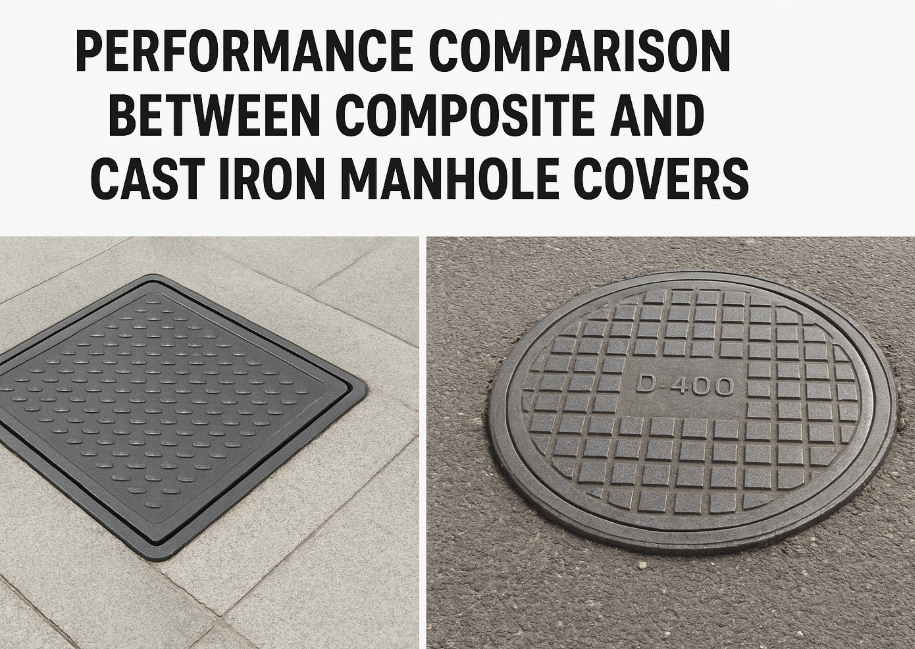
Urban infrastructure relies heavily on safe, durable, and efficient access solutions for underground utilities. Among the most critical components are manhole covers and grates, which provide access to sewer systems, telecommunications, and drainage lines. The global market today offers two major options: composite manhole covers and cast iron manhole covers (parut besi tuang).
This article provides an in-depth comparison between these two types, analyzing their performance, applications, and long-term value. The aim is to help municipalities, contractors, and engineers make informed decisions when selecting the most suitable cover for urban development projects.
Understanding the Basics of Manhole Covers
What is a Cast Iron Manhole Cover (Parut Besi Tuang)?
A cast iron manhole cover, locally referred to as parut besi tuang, is traditionally manufactured using ductile or gray cast iron. This material is known for:
- High load-bearing capacity
- Durability in heavy traffic areas
- Long lifespan with proper maintenance
Historically, cast iron covers have dominated municipal road networks due to their unmatched strength.
What is a Composite Manhole Cover?
Composite manhole covers are engineered from advanced materials such as fiberglass, resin, and polymer concrete. They are lightweight alternatives designed to overcome challenges associated with theft, corrosion, and manual handling.
Common advantages include:
- Resistance to corrosion
- Non-conductive and non-magnetic properties
- Significant weight reduction compared to cast iron
Strength and Durability
Cast Iron (Parut Besi Tuang)
- Load Capacity: Ideal for high-traffic areas, highways, and industrial zones.
- Durability: Can last several decades if installed and maintained properly.
- Weaknesses: Vulnerable to rust and corrosion in coastal or highly acidic environments.
Composite Covers
- Load Capacity: Suitable for light to medium traffic areas such as residential streets, sidewalks, and gardens. Heavy-duty composites are available but often costlier.
- Durability: Resistant to corrosion, weathering, and chemical exposure.
- Weaknesses: May suffer from cracking under extreme mechanical shock or poor installation practices.
Safety Considerations
Theft Prevention
- Cast Iron: Valuable as scrap metal, making theft a recurring issue in many cities.
- Composite: Virtually theft-proof since the material has little to no resale value.
Weight and Handling
- Cast Iron (Parut Besi Tuang): Extremely heavy, making manual handling difficult and risky without lifting equipment.
- Composite Covers: Lighter in weight, easier to transport and install, reducing workplace injuries.
Cost Efficiency
Initial Costs
- Cast Iron: Generally more affordable at the point of purchase.
- Composite: Higher initial investment due to advanced manufacturing processes.
Long-Term Maintenance
- Cast Iron (Parut Besi Tuang): Requires painting, rust treatment, and potential replacement after years of service.
- Composite Covers: Minimal maintenance; higher durability against rust, chemicals, and weathering reduces replacement costs.
Applications in Urban Infrastructure
Parut Longkang (Drain Grates)
- Cast Iron Grates (Parut besi tuang): Commonly used for highway drains, municipal roads, and industrial sites where high load resistance is critical.
- Composite Grates (Parut longkang): More suitable for residential neighborhoods, parks, and pedestrian walkways, where load demands are lower.
Pemasangan Parut (Grate Installation)
- Cast Iron: Installation requires heavy equipment, precise leveling, and corrosion-protective measures.
- Composite: Easier installation due to lightweight properties, reducing manpower and project time.
Role of Pengeluar Grate (Grate Manufacturers)
- Cast Iron Manufacturers: Established global supply chains, decades of experience, and adherence to international load standards.
- Composite Manufacturers: Innovative approach with eco-friendly, customized solutions, catering to new market demands.
Environmental Impact
Cast Iron (Parut Besi Tuang)
- High carbon footprint due to iron mining, smelting, and energy-intensive casting processes.
- Recycling possible, but contributes to greenhouse gas emissions.
Composite Covers
- Manufactured using polymers and resins, which may not always be recyclable.
- Reduced transportation emissions thanks to lighter weight.
- Longer lifespan reduces the frequency of production and replacement.
Internal Linking Strategy Suggestions
When publishing this article on a website, consider linking to:
- “Guide to Manhole Cover Installation” → target secondary keyword Pemasangan parut
- “How to Select Reliable Grate Manufacturers” → target Pengeluar Grate
- “Benefits of Using Drain Grates in Urban Planning” → target Parut longkang
- “Cast Iron vs Composite: Which Grate is Right for You?” → reinforce parut besi tuang
This not only strengthens keyword density but also improves site structure and SEO performance.
Conclusion
The choice between cast iron manhole covers (parut besi tuang) and composite alternatives depends largely on application, budget, and long-term strategy.
- For high-traffic municipal roads, cast iron remains unmatched in load capacity and durability.
- For residential areas, pedestrian pathways, and theft-prone zones, composite covers offer a lightweight, corrosion-resistant, and theft-proof solution.
Both options have their place in modern infrastructure, and collaboration with trusted Pengeluar Grate (grate manufacturers) ensures that municipalities get the right balance between safety, cost, and performance.
FAQ
1. Which is stronger: cast iron or composite manhole covers?
Cast iron (parut besi tuang) is generally stronger and better suited for heavy traffic areas, while composites are lighter and ideal for light to medium loads.
2. Are composite manhole covers more expensive?
Yes, but they often save costs in the long run due to reduced maintenance and theft issues.
3. What is the main advantage of composite covers?
Their corrosion resistance, lightweight nature, and theft-proof design make them ideal for modern urban environments.
4. Can cast iron manhole covers be recycled?
Yes, cast iron is recyclable, but the recycling process involves significant energy consumption.
5. How do I choose the right Pengeluar Grate (grate manufacturer)?
Look for manufacturers with certified quality standards, proven case studies, and the ability to offer both parut besi tuang and composite solutions depending on your needs.