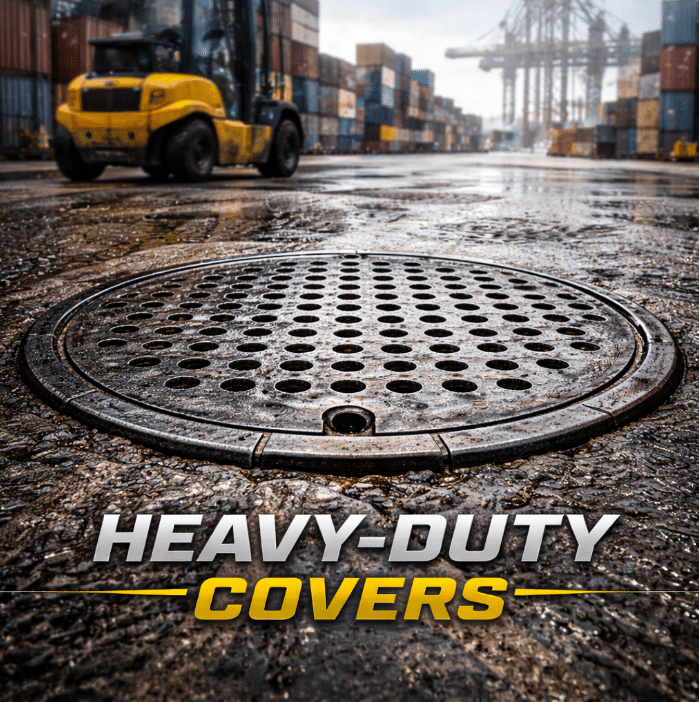
Heavy-duty access covers (also called manhole or trench covers) for global logistics hubs—such as ports, airports, and container terminals—must meet the most stringent standards for load capacity, durability, and safety. EN 124 classes E600 (60-tonne) and F900 (90-tonne) are the relevant load ratings. Key materials include ductile iron, steel, and advanced composites (GRP/FRP/SMC). Design features like anti-slip surfaces, locking mechanisms, and corrosion-resistant coatings are vital. This article reviews EN124 classifications, material trade-offs, load/fatigue testing, anti-corrosion measures, installation practices, maintenance costs, case studies, procurement checklists, safety compliance, and sustainability. Recommended tables compare materials, load classes, costs, and testing, and we include a Mermaid timeline for procurement steps. All information is drawn from industry standards (EN124), manufacturer datasheets, ISO-certified processes, and real-world projects.
EN124 Load Classifications (E600, F900) and Applications
EN 124-2 is the European standard for access covers and gratings (gully tops, manhole covers) used in vehicular and pedestrian areas. It specifies load classes from A15 up to F900. For heavy-duty logistics hubs, the relevant classes are E600 (capable of 600 kN, ~60-tonne load) and F900 (900 kN, ~90-tonne load). F900 is intended for “very heavy wheel or high point loads” such as aircraft pavements and container terminals, while E600 covers “heavy wheel or high point loads” typical of loading docks and industrial yards.
The following table summarizes EN124 classes and typical logistics applications:
| EN 124 Class | Test Load (kN) | Approx. Tonnes | Typical Logistics Use |
|---|---|---|---|
| E600 | 600 | 60 | Port docks, freight terminals, heavy trucks, industrial zones |
| F900 | 900 | 90 | Airports (runways/ramps), container terminal cranes, rail yards |
According to EN124, Group 5 (E600) is for “areas where heavy wheel or high point loads” occur (e.g. loading zones) and Group 6 (F900) for “areas with very heavy wheel loads” (e.g. aircraft areas). Xinghua notes that specifying the correct class is essential to match site load conditions. In practice, logistics hubs with container handlers, cranes, and heavy trucks generally require E600 or F900-rated covers to ensure safety under extreme axle loads.
Material Options: Ductile Iron, Steel, Composites
Heavy-duty covers for logistics hubs are commonly made from ductile iron, steel (galvanized), or composite materials (GRP/FRP/SMC). Each has trade-offs:
- Ductile Iron: Widely used for heavy-duty applications. It offers high tensile strength (>300 MPa yield, >420 MPa tensile), good toughness and fatigue resistance, and relatively low cost. Ductile iron covers are about 30% lighter than gray cast iron but still heavy (e.g. ~60–63 kg for an 850×850 mm cover). They require corrosion protection (epoxy coating or galvanization) since steel corrodes faster in marine environments. Recycling is straightforward, as ductile iron is 100% recyclable.
- Steel (Galvanized): Some manufacturers offer fabricated steel frames or reinforced covers. Steel has high strength but is heavier and more prone to corrosion if not coated. Galvanized steel frames (e.g. ISO EN 1464 hot-dip galvanized) are often used under FRP covers for saltwater resilience. Steel plates (if used as covers) require robust anti-corrosion finishes (zinc/epoxy) and are typically similar in weight to ductile iron, but they can suffer from fatigue cracking if not properly designed.
- Composite (GRP/FRP/SMC): Modern composites (glass/polymer, SMC) are much lighter (30–40% weight reduction) than iron covers, making installation and maintenance safer (often by a single worker). They exhibit excellent corrosion resistance (ideal for salty, chemical-prone environments) and are non-conductive, which adds safety near electrical infrastructure. Well-designed composites can meet F900 loads: e.g. Xinghua custom FRP covers for a port were rated F900 (90-tonne) while remaining ergonomic to lift. The downsides are higher initial cost and the need to verify load performance. However, composites often offer longer service life (>25 years) and lower maintenance (no rust painting). They are also recyclable (though with more processing).
The table below compares these materials on key attributes:
| Material | Tensile Strength (MPa) | Weight | Corrosion Resistance | Cost* | Recyclable? |
|---|---|---|---|---|---|
| Ductile Iron | ≥300 (yield) | Heavy (e.g. 60–80 kg) | Moderate (requires coating) | Low–Moderate | 100% (great) |
| Galvanized Steel | ≥250 (varies) | Heavy (similar to iron) | Galvanized resists corrosion | Moderate | Yes (re-melt) |
| Composite (FRP/SMC) | 150–250 (fiber-dependent) | Light (30–40% lighter) | Excellent (inherent) | Higher (premium) | Recyclable (fiber/plastic) |
| SMC (Sheet Molding Compound) | ~150–200 | Light–Moderate | Good (coated) | Moderate–High | Partially (grinding) |
*Costs vary by region and volume; composites may cost 20–30% more initially but save on maintenance.
Load Testing, Fatigue, and Certification
Heavy-duty covers must pass rigorous testing. EN124 specifies static load tests (apply 2× working load, with limits on deflection) and fatigue tests (repeated loading cycles) for E600/F900 classes. Table below outlines typical test requirements:
| Test Type | Requirement (Example) | Purpose |
|---|---|---|
| Static Load | 600 kN (E600) / 900 kN (F900) test load | Verify no breakage under max load |
| Elastic Deflection | ≤1 mm under test load | Ensure stiffness (no snap-through) |
| Fatigue (cyclic) | ~100,000 cycles at 2/3 load (EN124 Annex C) | Check crack initiation/resistance |
| Impact Test | Drop from 1m/1.5m (varies) | Evaluate shock resistance |
| Corrosion/Spray | 1,000hr salt spray per ISO 9227 (for coated covers) | Test coating durability in salt water |
| Slip Resistance | Achieve Pendulum Test Value (PTV) of ≥35 (wet) | Ensure pedestrian safety (if walking allowed) |
Covers must be CE marked (in EU) or have relevant approvals, often under ISO 9001-certified production. For example, Xinghua’s F900 covers passed in-house tests exceeding EN124 and comply with ISO 9001/14001. Buyers should request test reports showing compliance with EN124 and any additional standards (e.g. ASTM, AS/NZS3996) as part of the procurement.
Corrosion Protection
Port and logistics environments can be highly corrosive (saltwater spray, chemicals). Corrosion undermines cover strength and longevity. Strategies include:
- Material choice: Composites resist corrosion inherently. Ductile iron still corrodes but far less than steel (90-day corrosion of ductile iron was 0.25× that of mild steel).
- Coatings: Hot-dip galvanizing (min 450 g/m²) or epoxy/polyester powder coats are standard. Crescent Foundry notes E600/F900 covers often have zinc and epoxy coatings to prevent coastal corrosion.
- Design details: Stains and crevices accumulate corrosion, so designs minimize water traps. Sealed lift points and anti-theft locks (EPDM gaskets, double skirts) also block ingress.
- Stainless or Duplex Steel inserts: Rarely, stainless components are used at critical points (hinges, pins) to extend service in marine zones.
Installation, Locking, and Lifting Systems
Heavy-duty covers must be safely installed and maintained. Key aspects:
- Frame & Embed: Covers fit into robust cast-in or adjustable frames. Concrete infill must be level and strong.
- Locks & Hinges: Logistic hubs often require locking or hinged covers for security and quick access. Many F900 covers include anti-theft locks and hinged openings. For instance, Xinghua’s access covers include “elastic bar” locking and self-sealing gaskets.
- Lifting Features: Manual removal of 60–90 tonne covers is dangerous without aids. Xinghua solved this with ergonomically placed lifting handles enabling two-person manual lifting of F900 FRP covers.
- Anti-slip Surface: Covers used in sidewalks or pedestrian zones should have a high PTV (typically ≥35). Serrated, patterned surfaces or integral grit improve grip. Many catalogs list slip-resistant patterns complying with AS 4586 wet values.
- Alignment and Quietness: EN124 requires covers to sit flush (“non-rocking”) and dampen vibration. Elastomeric or double-skirt seals lock the cover in place and reduce noise.
Correct installation and handling tools are critical to realize design performance. Installers should follow manufacturer instructions for bedding mortar and tightening. A recommended practice is to torque-check locks after 6 months to ensure no loosening under traffic.
Maintenance, Lifecycle Cost, and Recyclability
Lifecycle costs (LCC) often outweigh upfront costs for heavy covers. Consider:
- Inspection Frequency: Industry guidance is 6–12 months routine inspection in heavy traffic or aggressive environments. Check surface wear, seals, hinges, and corrosion.
- Cleaning: Remove debris that can block drainage or hold water. Check for oils/chemicals and clean per local protocols.
- Preventive Repairs: Replace eroding gaskets, tighten loose locks, re-coat if needed to extend life.
- Lifecycle Cost Example: Composites may cost 20–30% more initially but avoid painting/greasing. They are 25+ years rated (vs 15–20 for metal in harsh use). Ductile iron is cheaper initially but may need re-coating after ~10–15 years.
The table below outlines typical maintenance profiles:
| Aspect | Ductile Iron Covers | Composite Covers |
|---|---|---|
| Inspection & Cleaning | Every 6–12 mo | Every 6–12 mo |
| Re-coating Needed | Yes, ~10–15 years | Rarely (has none) |
| Mechanical Failures | Possible (locks, hinges) | Possible (hardware) |
| Expected Service Life | ~20 years (with care) | 25+ years |
| End-of-Life Reuse | 100% recyclable | Some recyclability |
A robust maintenance plan extends cover life. For example, at the Northern Ireland port, the FRP covers “will last for years to come” due to their corrosion resistance. Meanwhile, ductile iron covers may require more frequent lifecycle investment (coating, heavy re-handling).
Procurement & Specification Checklist
For buyers at logistics hubs, specifying the right heavy-duty cover involves multiple steps. The Mermaid timeline below outlines key procurement steps from needs assessment to installation:
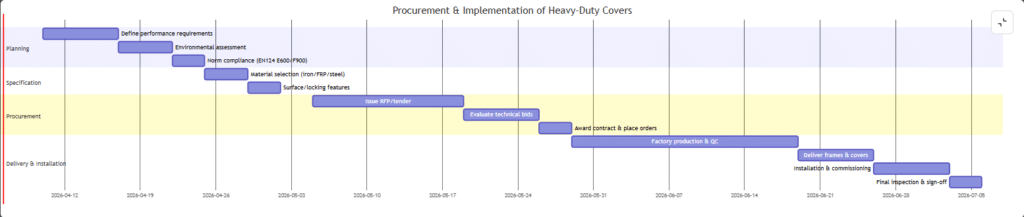
Key Procurement Checklist:
- Load & Site Requirements: Identify exact load classification (E600/F900) and operational context (ports, docks, runway, etc.). Assess traffic speed, axle load, and accident risk. (Use EN124 groups for guidance.)
- Material & Corrosion: Choose material per environment. For marine/chemical exposure, prioritize FRP or fully galvanized iron. Confirm anti-slip specs (PTV rating).
- Standards & Certification: Require EN124 certification, CE marking, ISO 9001/14001 manufacturing. Request test reports (static load, fatigue, impact, corrosion).
- Locking & Lifting: Specify locking (tamper-proof, hinged) and lifting aids (handles, tool slots). Ensure covers integrate with common site tools.
- Maintenance Plan: Clarify inspection schedule (e.g. every 6–12 months), maintenance responsibilities, and warranty terms.
- Cost & Lifecycle: Compare upfront cost vs. lifecycle cost. For projects valuing reduced downtime, consider composites for lower maintenance even if initial price is higher.
- Installation Support: Ensure suppliers provide installation guidance or supervision. Include frame/fittings in contract .
Following these steps will help secure a cover solution that is robust, compliant, and fit for a high-impact logistics environment.
Safety and Regulatory Compliance
Heavy-duty covers must meet not only EN124, but also local regulations (OSHA, local transport codes) and safety practices:
- Slip/Trip Safety: Covers in pedestrian areas should have non-slip surface (often PTV≥40 wet). Guards should not cause tripping hazards.
- Access Safety: Locking covers prevent unauthorized access. Lift points must be strong enough for safe removal and avoid sudden drop (as seen in some covers with anti-fall design).
- Fire/Electrical: In warehouses handling hazardous cargo, access covers over utilities may require fire-resistant seals or continuity (electrically conductive bronze covers).
- Quality Systems: Use ISO 9001-certified products. Check for batch traceability and compliance audits. Some contracts require Anti-Slip test certification (e.g., AS4586 or DIN 51130).
- Environmental/Sustainability: For Green building rating (LEED, BREEAM), consider recycled content and recyclability. Documentation on lifecycle analysis may be needed.
Meeting these ensures not only legal compliance but also insurance and liability coverage. For example, Xinghua Foundry highlights that E600/F900 covers “comply with global port standards and ISO/EN” limiting liability risks.
Sustainability and Recyclability
As green infrastructure becomes a priority, sustainability of heavy covers matters. Key points:
- Recyclability: Ductile iron is fully recyclable into new iron products. Composites can often be ground and used as filler or heat-treated for reuse (progress in composite recycling is ongoing).
- Materials Efficiency: A long service life reduces frequent replacement. Durable coatings (galvanizing) and corrosion-resistant materials extend life, aligning with circular economy principles.
- Manufacturing Footprint: Look for suppliers with ISO 14001 environmental management. Some foundries use electric induction furnaces (lower emissions) and reclaimed iron.
- Compliance: New EU/UK regulations emphasize circularity; specify recycled content if possible.
In sum, heavy-duty covers can support sustainability goals by using recyclable materials and requiring less maintenance. For example, recycled ductile iron and long-life composites contribute positively to a hub’s lifecycle carbon footprint.
Conclusion
Heavy-duty covers for global logistics hubs must combine strength, durability, and safety. EN124 E600 and F900 classes provide the framework for selecting covers able to handle 60–90 tonne loads. Material choice (ductile iron vs steel vs composite) depends on site conditions, but each has proven solutions: ductile iron for raw strength (with coatings for corrosion), and advanced GRP/SMC composites for lighter weight and exceptional corrosion resistance. Load and fatigue testing as per EN124 ensures covers endure repeated extreme stresses, while anti-slip design and locking mechanisms protect personnel.
Real-world projects underline best practices. At a Northern Ireland container port, custom F900 FRP trench covers met the demanding load and corrosion specs while allowing safe manual access. Similarly, traditional ductile iron F900 covers with elastomer seals have served airports and docks worldwide.
Ultimately, a buyer’s specification checklist must encompass all these facets—from load class and materials to maintenance and compliance—to achieve a safe, long-lasting solution. Prioritizing quality, certified designs (with ISO quality systems) and planning for the full lifecycle will maximize safety and value. Heavy-duty covers may seem mundane, but for global logistics hubs they are critical infrastructure components that, when properly chosen, ensure reliable operations for decades.
FAQ
1. What do EN124 E600 and F900 classes mean?
EN124 classes E600 and F900 designate covers that withstand 60-tonne and 90-tonne test loads respectively. E600 is for heavy industrial zones (ports, terminals) and F900 for extreme loads (aircraft pavements).
2. Which material is best for port environment covers?
Ductile iron (with galvanization) is common for strength, but composite GRP/FRP is increasingly preferred for its corrosion resistance and lighter weight. Choice depends on budget and maintenance strategy.
3. How are heavy-duty covers locked or secured?
High-end covers often have anti-theft locking bars or hinged systems with gaskets. For example, reinforced locking bars and double-skirt seals are used in F900 covers to prevent tampering and ensure water tightness.
4. How often should these covers be inspected/maintained?
We recommend inspections every 6–12 months in heavy traffic hubs. Check for corrosion, wear, and that seals and hinges function. Cleaning debris from gratings/trenches is also key.
5. Are heavy-duty covers environmentally friendly?
Yes, many are recyclable. Ductile iron covers are 100% recyclable into new iron. Composites often use recyclable resins. Using long-life, durable covers also reduces material use over time.