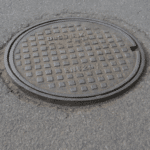
In urban infrastructure, industrial facilities, and modern civil engineering projects, manhole covers and gratings are two essential but often misunderstood components. At first glance, they may appear interchangeable because both are installed over underground systems such as drainage networks, sewage pipelines, and utility corridors. However, from a professional engineering perspective, manhole cover vs grating is not a simple comparison of appearance, but a discussion involving functionality, structural design, load-bearing capacity, safety, maintenance, and application context.
Choosing the wrong solution can lead to long-term issues such as premature damage, increased maintenance costs, safety hazards, or non-compliance with regulations. Therefore, understanding the key differences between manhole covers and gratings is crucial for engineers, contractors, municipal planners, and property developers.
1. Functional Differences Between Manhole Covers and Gratings
The most fundamental distinction in the manhole cover vs grating comparison lies in their primary function. A manhole cover is designed to fully seal an access point to underground infrastructure. Its purpose is to provide safe, secure, and controlled access for inspection, maintenance, and emergency operations. Manhole covers prevent unauthorized entry, block debris from entering the system, and ensure surface continuity for pedestrians and vehicles.
Gratings, on the other hand, are primarily designed for surface drainage and water flow. They allow rainwater, runoff, and liquids to pass through while blocking larger debris. Gratings are typically installed over drainage channels, trenches, or catch basins where rapid water evacuation is essential. Unlike manhole covers, gratings are not meant to fully seal the opening, but rather to balance access control with permeability.
Understanding this functional difference is the first step in selecting the correct solution for a specific engineering application.
2. Structural Design and Load-Bearing Capacity
When analyzing manhole cover vs grating, structural design and load-bearing performance are critical considerations. Manhole covers are engineered to withstand static and dynamic loads from vehicles, machinery, and pedestrian traffic. Depending on the application, they may comply with load classes such as EN124 B125, C250, D400, or even higher. Their solid structure distributes loads evenly to protect the underground chamber.
Gratings also carry loads, but their open-grid design changes how forces are transferred. Load-bearing gratings are reinforced through rib thickness, bar spacing, and frame integration. However, due to their open structure, gratings generally prioritize drainage efficiency over extreme load resistance, except in heavy-duty industrial designs.
In high-traffic roads and highways, manhole covers are typically preferred. In areas where water management is the priority, such as parking lots or industrial yards, gratings offer a more suitable structural solution.
3. Safety Considerations and Risk Management
Safety is a central factor in the manhole cover vs grating debate. Manhole covers are designed to minimize risks such as accidental falls, cover displacement, and noise caused by movement. Many modern designs include anti-slip surfaces, locking mechanisms, and anti-fall structures to enhance public safety.
Gratings, while effective for drainage, require careful design to ensure pedestrian safety. Bar spacing, surface texture, and orientation must be optimized to prevent heels, bicycle tires, or mobility aids from becoming trapped. In public spaces, safety-certified gratings are essential to meet accessibility and liability standards.
From a risk management perspective, manhole covers are often used in areas with higher safety sensitivity, while gratings require precise engineering to ensure safe integration into public and industrial environments.
4. Installation, Maintenance, and Lifecycle Costs
Installation and maintenance practices further distinguish manhole cover vs grating solutions. Manhole covers typically require precise frame installation, leveling, and sealing to ensure long-term stability. Once installed correctly, they offer relatively low maintenance requirements, especially when manufactured from ductile iron or composite materials.
Gratings may require more frequent cleaning due to debris accumulation, especially in areas with heavy rainfall or vegetation. However, their modular design often makes replacement and inspection easier. Over the lifecycle of a project, maintenance costs depend heavily on environmental conditions and usage patterns.
From a cost-efficiency perspective, selecting the right product from the beginning helps reduce operational expenses and prevents premature failure.
5. Application Scenarios and Industry Use Cases
The manhole cover vs grating decision is highly context-dependent. Manhole covers are widely used in roads, highways, residential streets, airports, and industrial facilities where secure access and high load resistance are required. They are also common in telecommunications, electrical, and sewage systems.
Gratings are more suitable for stormwater drainage systems, trench drains, parking areas, factory floors, and commercial landscapes. In integrated infrastructure projects, both components are often used together, each serving a specific function within the same system.
Understanding application scenarios ensures that engineers and planners select solutions that align with functional requirements and long-term performance expectations.
6. Materials, Standards, and Customization Options
Material selection plays a vital role in the manhole cover vs grating comparison. Common materials include cast iron, ductile iron, composite materials, and stainless steel. Manhole covers often prioritize strength and durability, while gratings focus on corrosion resistance and drainage efficiency.
Both products can be customized in terms of size, shape, surface treatment, and branding. Customization ensures compliance with international standards such as EN124, ASTM, or local municipal regulations. By working with experienced manufacturers, projects can achieve optimal performance and regulatory approval.
Customization also enhances aesthetics, particularly in urban landscapes and commercial developments.
The comparison of manhole cover vs grating highlights that these two components serve distinct yet complementary roles in modern infrastructure. Manhole covers prioritize access security, load-bearing strength, and safety, while gratings focus on efficient drainage and surface water management. Choosing the right solution requires a clear understanding of functional requirements, safety standards, environmental conditions, and long-term maintenance considerations.
By making informed decisions based on engineering principles and real-world applications, stakeholders can improve infrastructure performance, reduce costs, and enhance public safety.
FAQ
1. What is the main difference between a manhole cover and a grating?
Manhole covers seal access points, while gratings allow water to pass through for drainage.
2. Which is better for roads: manhole cover or grating?
Manhole covers are generally better for roads due to higher load-bearing capacity.
3. Are gratings safe for pedestrian areas?
Yes, when properly designed with anti-slip surfaces and safe bar spacing.
4. Can manhole covers and gratings be customized?
Both can be customized to meet specific engineering and regulatory requirements.
5. Do international standards apply to both products?
Yes, standards such as EN124 and ASTM apply to both manhole covers and gratings.