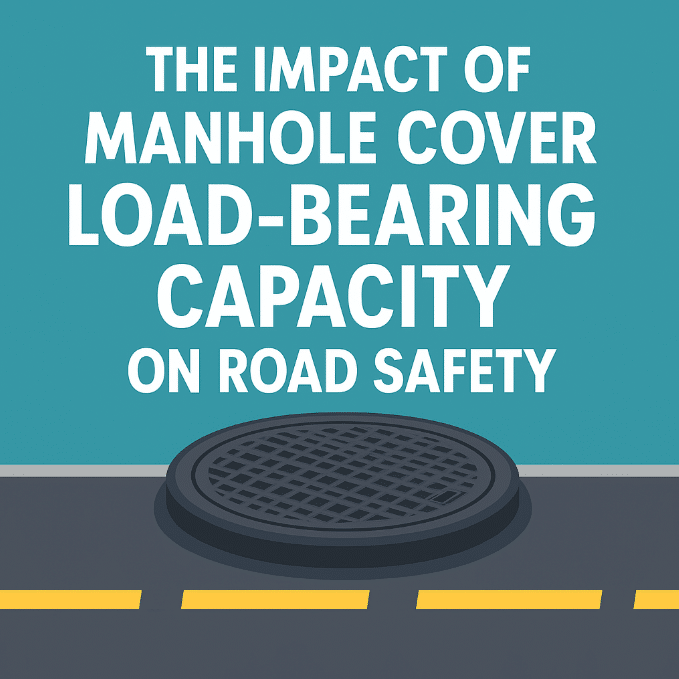
The load-bearing capacity of manhole covers plays a central role in urban road safety. Whether installed on highways, municipal streets, industrial zones, or pedestrian walkways, every manhole cover must withstand predictable and unpredictable loads. When the load-bearing capacity is insufficient, the risk of structural failure increases, leading to road collapse, accidents, and damage to vehicles. This article provides a detailed analysis of how load-bearing performance affects road safety, how manhole covers are engineered to meet different load classes, and what factors cities should consider when selecting high-quality products. By understanding the engineering principles behind manhole cover safety, municipalities and contractors can make informed decisions that enhance the long-term performance of public infrastructure.
1. Understanding Load-Bearing Capacity in Manhole Covers
Load-bearing capacity refers to the maximum weight that a manhole cover can support without deforming, cracking, or failing. It determines where the cover can be safely installed and how long it can remain functional under traffic stress. For roads with heavy vehicles, the load requirement is significantly higher than for pedestrian-only zones. The core purpose of assessing load-bearing capability is to ensure that the manhole cover can resist static and dynamic loads, including impacts, vibrations, and vehicle wheel pressure.
Why Load-Bearing Capacity Matters
If a manhole cover is not strong enough, it may sink or break. This puts drivers, pedestrians, and the entire road system at risk. Municipalities must ensure that every cover used on public roads meets international load-class certifications.
Types of Manhole Cover Materials and Their Load Capacity
The material selected directly influences durability and load performance. Different materials provide varied strength levels and suitability for different road environments.
Cast Iron Manhole Covers
Ductile iron is the most widely used material. It offers excellent mechanical strength, toughness, and resistance to cracking. The microstructure of ductile iron allows it to handle high loads, especially in heavy-traffic urban roads and highways. Heavy-duty cast iron manhole covers can withstand extremely high pressures while maintaining longevity.
Composite Manhole Covers
Composite materials—such as fiberglass, resin, polymer concrete, and reinforced plastics—are becoming increasingly popular. Though lighter in weight, they can be engineered to meet demanding load classes. Composite covers also resist corrosion, making them suitable for coastal and chemical-exposure environments.
Steel and Stainless-Steel Covers
Steel covers provide higher tensile strength but may require protective coatings to prevent corrosion. Stainless steel offers excellent anti-rust performance and is ideal for decorative or architectural urban zones where visual quality is important.
International Load Class Standards for Road Manhole Covers
To ensure global road safety, manhole covers are tested under standardized load classes. Understanding these categories helps municipalities choose the right product for each road type.
EN 124 Standard (Europe)
EN 124 divides manhole covers into six load classes:
- A15 for pedestrian zones
- B125 for sidewalks and parking areas
- C250 for road edges
- D400 for urban main roads
- E600 for docks and industrial areas
- F900 for airports and ultra-heavy-duty environments
The D400 class is commonly used in city roads, ensuring optimal safety and durability.
AASHTO Standards (USA)
AASHTO standards classify covers based on vehicle traffic load and impact. They emphasize long-term performance under repetitive heavy vehicle stress.
Why Standards Matter
Certified load classes ensure that covers do not fail prematurely. Compliance protects both the public and city infrastructure from costly accidents.
How Load-Bearing Capacity Influences Road Safety
Manhole cover failure can cause substantial damage. Load capacity directly affects the safety of drivers, cyclists, and pedestrians.
Preventing Manhole Cover Subsidence
When the load is greater than what the cover was designed to handle, subsidence occurs. This leads to potholes, depressions, and uneven road surfaces. Subsidence is a major cause of traffic accidents and must be addressed through proper load-class selection.
Reducing the Risk of Breakage
If a manhole cover breaks under load, vehicles may fall into the opening, causing severe injuries. Reinforced materials and certified load-class testing help prevent such failures.
Ensuring Long-Term Structural Integrity
Road safety is not only about immediate performance. Over time, environmental factors such as rainfall, corrosion, and temperature changes reduce load-bearing performance. Proper engineering and maintenance maintain long-term safety.
Engineering Factors That Determine Load-Bearing Strength
Manhole cover strength is not determined by material alone; it is the result of a full engineering approach.
Structural Design
The surface pattern, internal reinforcement ribs, frame thickness, and contact interface all contribute to durability. Advanced CAD design helps optimize the distribution of load pressures.
Manufacturing Processes
Casting quality, curing procedures, machining accuracy, and quality inspections directly affect the product’s final load performance. High-precision manufacturing reduces defects and improves overall safety.
Installation Quality
Improper installation reduces load capacity—even for certified covers. Frames must be properly leveled, secured, and sealed to ensure stable load transfer.
Improving Road Safety Through Better Manhole Cover Selection
Municipalities and contractors can significantly reduce accidents by choosing the right covers.
Choose Covers Based on Road Usage
Highways should use D400 or higher load-class covers. Pedestrian plazas may use lighter classes. Choosing the right load class prevents premature failure.
Consider Anti-Skid and Anti-Noise Designs
Skid-resistant surfaces help avoid vehicle slippage. Anti-noise designs reduce rattling caused by heavy vehicles.
Conduct Regular Load-Capacity Checks
Periodic inspections identify early signs of wear, allowing cities to replace covers before accidents occur.
Conclusion
The load-bearing capacity of manhole covers is a critical factor in maintaining road safety. Whether in heavy-traffic highways or pedestrian zones, selecting the appropriate material, load class, and manufacturing quality ensures stability, durability, and long-term performance. As cities expand and traffic loads increase, choosing high-quality manhole covers becomes essential for preventing accidents and maintaining public safety. By understanding load classes, engineering principles, and proper installation methods, decision-makers can significantly enhance the reliability of urban infrastructure.
FAQs
1. Why is load-bearing capacity important for road manhole covers?
It ensures that covers can withstand vehicle pressure without breaking or sinking, preventing accidents and protecting road users.
2. What load class should be used for urban roads?
Most urban roads require D400-class manhole covers to safely support heavy traffic.
3. Do composite manhole covers offer strong load-bearing performance?
Yes. Modern composite covers can be engineered to meet strict load-class requirements and offer high corrosion resistance.
4. What causes manhole cover subsidence?
Insufficient load capacity, poor installation, frame damage, or heavy-vehicle overloading.
5. How can cities improve road safety related to manhole covers?
By using certified heavy-duty covers, conducting annual inspections, ensuring proper installation, and replacing damaged covers promptly.