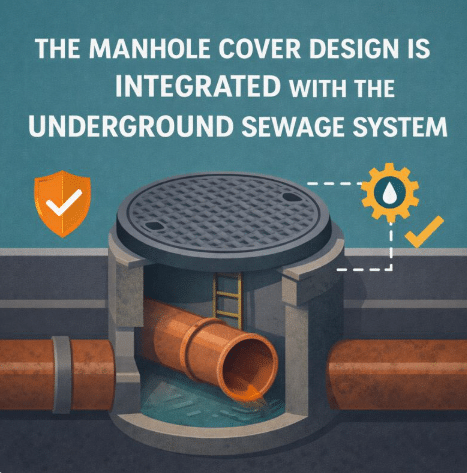
Modern urban infrastructure depends heavily on the seamless coordination between surface-level components and underground systems. Among these, the integration of manhole cover design with the underground sewage system plays a critical yet often underestimated role. A well-designed manhole cover is not merely a removable lid; it is a functional interface between traffic loads, environmental exposure, maintenance access, and the complex hydraulic and structural requirements of sewage networks.
As cities expand and underground utilities become denser, traditional isolated design approaches are no longer sufficient. Engineers, municipalities, and infrastructure planners are increasingly adopting integrated design concepts that consider manhole covers as part of a unified sewage system rather than standalone products.
1. The Role of Manhole Covers Within Underground Sewage Systems
Manhole covers serve as critical access points to underground sewage systems, allowing for inspection, cleaning, monitoring, and emergency intervention. When viewed within an integrated system design framework, their function extends beyond access to include load transfer, sealing performance, and environmental protection.
An integrated design ensures that the manhole cover, frame, shaft, and surrounding pavement work together structurally. This reduces stress concentrations that often lead to cracking, settlement, or premature failure. Proper alignment with sewage flow paths also minimizes turbulence, sediment accumulation, and hydraulic inefficiencies inside the manhole chamber.
From a systems perspective, integrating manhole cover design with the sewage network improves operational reliability. Maintenance teams can access pipelines more efficiently, while municipalities benefit from reduced surface disruptions. This holistic approach transforms the manhole cover from a passive component into an active element of urban sewage infrastructure.
2. Structural Integration: Load Distribution and System Stability
One of the most important aspects of integrating manhole cover design with underground sewage systems is structural load management. Urban roads are subjected to increasing traffic volumes and heavier vehicles, which transmit dynamic loads directly onto manhole covers and frames.
Integrated design accounts for how these loads are transferred from the cover to the frame, down the manhole shaft, and into the surrounding soil and sewer structure. By coordinating dimensions, materials, and reinforcement strategies, engineers can prevent uneven settlement and deformation. This is especially critical in high-load zones such as highways, logistics hubs, and industrial areas.
Additionally, structural integration improves system stability during extreme events, including flooding or seismic activity. When the manhole cover and sewage structure are designed as a unified system, the risk of displacement, collapse, or uplift is significantly reduced, enhancing overall urban safety.
3. Hydraulic Compatibility and Sewage Flow Optimization
Beyond structural considerations, integrated manhole cover design directly influences hydraulic performance within the sewage system. Poorly aligned covers and chambers can disrupt flow patterns, leading to sediment buildup, blockages, and increased maintenance frequency.
By aligning the manhole cover opening, chamber geometry, and inlet/outlet pipes, designers can ensure smoother sewage flow and reduced energy losses. Integrated systems also facilitate the use of drop structures, flow deflectors, and ventilation features that improve hydraulic efficiency and odor control.
In stormwater and combined sewer systems, integrated manhole designs play a vital role in managing peak flows and preventing surface flooding. Proper sealing and elevation coordination help prevent inflow and infiltration, protecting both the sewage network and surrounding environment.
4. Material Selection and Durability in Integrated Designs
Material selection is central to the successful integration of manhole covers with underground sewage systems. Ductile iron, composite materials, and reinforced concrete are commonly used, each offering specific advantages depending on environmental and load conditions.
Integrated design ensures material compatibility between the manhole cover, frame, shaft, and sewage pipes. This reduces differential movement caused by thermal expansion, corrosion, or aging. For example, corrosion-resistant coatings and watertight seals are often specified as part of the overall system design, particularly in aggressive sewage environments.
Durability is further enhanced by selecting materials that support long service life with minimal maintenance. When the manhole cover is designed in harmony with the sewage structure, lifecycle costs are reduced, and infrastructure sustainability is improved.
5. Safety, Accessibility, and Maintenance Efficiency
Safety is a key driver behind integrated manhole cover and sewage system design. Poorly fitted or unstable covers pose risks to pedestrians, cyclists, and vehicles, while inadequate access can endanger maintenance personnel.
An integrated approach ensures precise fitment, anti-slip surfaces, anti-fall features, and secure locking mechanisms aligned with system requirements. Accessibility is optimized by coordinating cover size, opening direction, and internal ladder placement with sewage network layout.
From a maintenance perspective, integrated designs reduce inspection time and operational disruptions. Standardized components, predictable access points, and clear system documentation allow maintenance teams to work more efficiently, supporting proactive asset management strategies.
6. Future Trends in Integrated Manhole Cover and Sewage System Design
As smart cities and digital infrastructure gain momentum, the integration of manhole cover design with underground sewage systems is evolving further. Sensors for water level, gas detection, and structural health monitoring are increasingly embedded into manhole covers as part of integrated systems.
These technologies enable real-time monitoring of sewage conditions, early detection of blockages, and predictive maintenance planning. Integrated design also supports modular construction methods, allowing faster installation and easier upgrades as urban needs change.
Looking ahead, sustainability and resilience will remain central themes. Integrated manhole and sewage system designs will continue to adapt to climate challenges, urban densification, and stricter regulatory requirements, reinforcing their importance in modern infrastructure planning.
Conclusion
The integration of manhole cover design with the underground sewage system represents a significant shift from traditional component-based thinking toward holistic infrastructure engineering. By considering structural, hydraulic, material, safety, and operational factors as part of a unified system, cities can achieve higher reliability, lower maintenance costs, and improved public safety.
As urban environments become more complex, integrated manhole cover solutions will play an increasingly strategic role in ensuring efficient and sustainable sewage networks. For engineers, municipalities, and infrastructure investors, adopting this integrated approach is not only a technical decision but a long-term investment in resilient urban development.
FAQ
1. Why is integrated manhole cover design important for sewage systems?
It improves structural stability, hydraulic performance, safety, and long-term maintenance efficiency.
2. How does integration reduce maintenance costs?
By minimizing settlement, blockages, and component mismatches, reducing repair frequency.
3. What materials are best for integrated manhole cover systems?
Ductile iron and advanced composites are commonly preferred for durability and load resistance.
4. Can integrated designs help prevent urban flooding?
Yes, they improve sealing and flow control, reducing inflow and infiltration during heavy rain.
5. Are smart technologies part of integrated manhole cover systems?
Increasingly so, with sensors and monitoring systems becoming standard in modern designs.