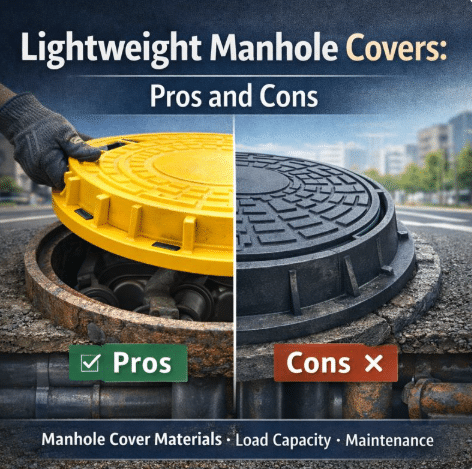
As urban infrastructure evolves, cities and industrial developers are increasingly searching for solutions that balance safety, durability, cost efficiency, and ease of installation. One solution that has gained growing attention is the use of lightweight manhole covers. Traditionally, manhole covers were manufactured almost exclusively from cast iron or ductile iron, prioritizing strength over handling convenience. However, modern materials such as composite resins, reinforced plastics, aluminum alloys, and hybrid structures have introduced new possibilities for reducing weight without sacrificing performance.
Lightweight manhole covers are now widely discussed in municipal planning, industrial parks, residential developments, and utility projects. While their benefits are attractive—especially in terms of installation efficiency and worker safety—they also raise valid concerns related to load capacity, lifespan, and application limitations.
What Are Lightweight Manhole Covers?
Lightweight manhole covers are access covers designed to significantly reduce overall mass compared to traditional cast iron alternatives. Depending on material selection and structural design, a lightweight manhole cover may weigh 30% to 70% less than a conventional iron cover of the same size.
Common materials used include fiber-reinforced composites, polymer concrete, aluminum alloys, and steel-composite hybrids. These materials are engineered to meet specific performance standards, often focusing on pedestrian areas, residential roads, utility corridors, and low-to-medium traffic environments.
The growing adoption of lightweight manhole covers reflects broader trends in infrastructure modernization, including ergonomic installation practices, sustainability goals, and lifecycle cost optimization.
Advantages of Lightweight Manhole Covers
One of the most compelling reasons for adopting lightweight manhole covers is improved handling and installation efficiency. Traditional cast iron covers often require lifting equipment or multiple workers, increasing labor costs and safety risks. Lightweight alternatives can typically be installed and removed manually by one or two workers, reducing project timelines and minimizing workplace injuries.
Another major advantage is corrosion resistance. Many lightweight manhole covers, especially composite-based designs, are inherently resistant to water, chemicals, and salt exposure. This makes them particularly suitable for coastal areas, chemical plants, wastewater systems, and regions with aggressive environmental conditions.
Lightweight covers also contribute to lower transportation and logistics costs. Reduced weight means more units can be transported per shipment, improving supply chain efficiency and reducing carbon emissions associated with freight.
Load Capacity and Structural Performance Considerations
Despite their reduced weight, modern lightweight manhole covers are engineered to meet specific load-bearing standards. Many products comply with EN 124 load classes, such as A15 or B125, which are suitable for pedestrian zones, sidewalks, and light vehicle access areas.
However, lightweight manhole covers generally have limitations when compared to ductile iron covers in high-load environments. For highways, heavy traffic roads, ports, and industrial zones with frequent truck traffic, traditional ductile iron remains the preferred option due to its superior fatigue resistance and long-term structural stability.
Selecting the correct load class is critical. Lightweight manhole covers perform best when applied within their designed load range and installation guidelines are strictly followed.
Installation and Maintenance Benefits
From a maintenance perspective, lightweight manhole covers offer clear operational advantages. Their reduced weight simplifies routine inspections, emergency access, and utility repairs. Maintenance crews can work more efficiently without specialized lifting tools, reducing downtime for roads and facilities.
Additionally, many lightweight covers are designed with anti-seize surfaces and integrated frames that minimize rattling and noise. This improves user experience in residential and commercial areas, where noise complaints are a common issue.
In long-term maintenance planning, corrosion-resistant lightweight manhole covers often require fewer repairs and replacements, especially in environments where metal corrosion is a persistent problem.
Cost Analysis: Initial Price vs Lifecycle Value
The initial purchase price of lightweight manhole covers can vary significantly depending on material and certification level. In some cases, composite or aluminum covers may appear more expensive than low-grade cast iron alternatives.
However, when evaluating total lifecycle cost—including installation labor, transportation, maintenance, and replacement—lightweight manhole covers often demonstrate competitive or superior value. Reduced labor costs, lower maintenance frequency, and longer corrosion resistance contribute to overall savings across the service life of the product.
For municipalities and infrastructure operators focused on long-term budgeting rather than short-term procurement savings, lightweight manhole covers present a financially attractive option in suitable applications.
Safety and Anti-Theft Performance
Safety is another important consideration. Lightweight manhole covers reduce the risk of worker injuries during handling, which is a major occupational safety concern in utility maintenance operations.
From a public safety perspective, many lightweight covers are designed with locking mechanisms, anti-slip surfaces, and precise frame fitting to prevent accidental displacement. Additionally, composite manhole covers have little to no scrap value, making them significantly less attractive to thieves compared to cast iron covers.
This anti-theft advantage is particularly valuable in urban and developing regions where manhole cover theft poses serious risks to pedestrians and vehicles.
Environmental and Sustainability Factors
Lightweight manhole covers align well with modern sustainability objectives. Composite and polymer-based covers often incorporate recycled materials and require less energy to manufacture compared to iron casting processes.
Reduced transportation weight also lowers fuel consumption and greenhouse gas emissions throughout the supply chain. Furthermore, corrosion-resistant materials extend product lifespan, reducing the environmental impact associated with frequent replacements.
For infrastructure projects seeking green certifications or environmentally responsible solutions, lightweight manhole covers support sustainability goals without compromising functional requirements.
Limitations and Potential Drawbacks
Despite their many advantages, lightweight manhole covers are not universally suitable for all applications. Their primary limitation lies in high-load environments, where continuous heavy traffic can exceed material fatigue limits.
In some cases, improper installation or poor-quality manufacturing can lead to deformation or premature wear. This highlights the importance of sourcing lightweight manhole covers from reputable manufacturers that comply with recognized international standards.
Another consideration is temperature sensitivity. Certain composite materials may expand or contract more than metal under extreme temperature variations, which must be addressed during design and installation.
Conclusion
Lightweight manhole covers represent a practical and forward-looking solution for many modern infrastructure projects. Their benefits—ranging from improved safety and installation efficiency to corrosion resistance and sustainability—make them particularly well-suited for pedestrian areas, residential zones, utility corridors, and low-to-medium traffic environments.
However, they are not a universal replacement for traditional ductile iron covers. Careful evaluation of load requirements, environmental conditions, and lifecycle costs is essential to making the right selection. When applied appropriately, lightweight manhole covers offer a balanced combination of performance, economy, and long-term value that aligns with the evolving needs of urban infrastructure.
Frequently Asked Questions (FAQ)
1. Are lightweight manhole covers strong enough for road use?
Lightweight manhole covers are suitable for roads with light to moderate traffic when they meet appropriate load standards such as EN 124 B125. They are not recommended for heavy highways.
2. What materials are commonly used in lightweight manhole covers?
Common materials include fiber-reinforced composites, polymer concrete, aluminum alloys, and hybrid steel-composite structures.
3. Do lightweight manhole covers reduce maintenance costs?
Yes, their corrosion resistance and ease of handling often result in lower maintenance and labor costs over time.
4. Are lightweight manhole covers theft-resistant?
Most composite lightweight covers have little scrap value and often include locking systems, making them highly resistant to theft.
5. How long do lightweight manhole covers last?
With proper installation and appropriate application, high-quality lightweight manhole covers can last 20–30 years or more.