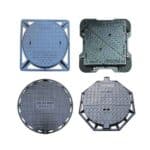
Why Integrated Manhole Covers and Gratings Matter in Modern Infrastructure
In modern urban infrastructure, integrated applications of manhole covers and gratings have become a critical design approach for enhancing safety, drainage efficiency, durability, and visual consistency. Rather than treating manhole covers and surface gratings as separate components, engineers increasingly design them as coordinated systems that work together under complex environmental and load conditions. This integration is especially important in cities facing heavy traffic, intense rainfall, and rising demands for sustainable development.
From municipal roads and industrial parks to public squares and commercial complexes, integrated manhole cover and grating systems reduce long-term maintenance costs, improve load distribution, and optimize water management. This article shares real-world case studies and engineering insights to illustrate how integrated solutions deliver measurable benefits. By examining practical applications, standards compliance, and material selection, decision-makers can better understand why integration is becoming the preferred choice in infrastructure projects worldwide.
Concept and Engineering Logic of Integrated Manhole Cover and Grating Systems
Integrated manhole covers and gratings are designed as a functional unit, rather than independent elements installed in isolation. From an engineering perspective, this approach ensures consistent load transfer, aligned elevations, and coordinated drainage performance. When manhole covers and gratings share a common structural logic, issues such as differential settlement, vibration noise, and water pooling are significantly reduced.
In practical applications, integration involves unified frame design, compatible materials, and standardized installation procedures. For example, a cast iron manhole cover may be paired with ductile iron or composite gratings that share similar load-bearing classifications. This alignment allows engineers to predict system behavior more accurately under vehicle loads, thermal expansion, and long-term wear.
By treating manhole cover application and drainage grating systems as part of a single infrastructure solution, cities can achieve higher safety standards and extend service life, especially in high-load and high-frequency use environments.
Case Study One: Urban Roadway Drainage and Access Integration
One common application of integrated manhole covers and gratings is in urban roadway drainage systems. In a mid-sized metropolitan road reconstruction project, engineers replaced traditional standalone components with an integrated system designed to handle both traffic access and surface runoff. The manhole covers provided secure underground access, while adjacent gratings managed stormwater flow efficiently.
The integration allowed for consistent elevation control, preventing uneven surfaces that often cause vehicle vibration and noise complaints. Load-bearing performance was improved because the system distributed vehicle loads across a wider area. Additionally, the coordinated design reduced installation errors, shortening construction timelines.
This case demonstrates how integrated manhole covers and gratings enhance road safety, reduce maintenance frequency, and support smoother traffic flow—key priorities for modern urban infrastructure solutions.
Case Study Two: Industrial Zones and Heavy-Load Environments
Industrial parks present unique challenges due to heavy truck traffic, chemical exposure, and continuous operations. In one industrial logistics hub, integrated manhole covers and drainage gratings were selected to withstand extreme loads and harsh conditions. Ductile iron manhole covers were paired with reinforced gratings designed for high-load classifications.
The unified design minimized stress concentration points, reducing the risk of cracking or displacement. Protective coatings applied across both components ensured consistent corrosion resistance, especially in areas exposed to oils and industrial wastewater. The integration also simplified inspection routines, as maintenance teams could assess the entire system more efficiently.
This case highlights how integrated applications are not only about convenience but also about engineering resilience and operational reliability in demanding environments.
Case Study Three: Public Squares and Pedestrian-Centric Spaces
In public squares and pedestrian zones, safety and aesthetics are as important as functionality. An integrated manhole cover and grating system was implemented in a large civic plaza to support drainage while maintaining a clean architectural appearance. Custom-designed covers and gratings shared surface patterns and finishes, blending seamlessly with the surrounding pavement.
The integrated approach ensured anti-slip performance, reduced tripping hazards, and maintained consistent surface levels. From a drainage perspective, the gratings effectively handled rainwater during peak storms, protecting underground facilities and pedestrian comfort.
This example demonstrates how integrated manhole cover application can meet both engineering and architectural requirements, reinforcing the value of customization within standardized systems.
Material Selection and Standards in Integrated Applications
Material compatibility plays a central role in successful integration. Cast iron manhole covers, ductile iron frames, and composite gratings are commonly combined based on load requirements, corrosion resistance, and environmental conditions. Selecting materials with similar mechanical properties ensures predictable performance over time.
Compliance with international standards—such as EN 124 load classes or ASTM specifications—ensures that both manhole covers and gratings meet safety and durability benchmarks. Integrated systems designed under the same standard framework reduce regulatory risks and improve project approval efficiency.
By aligning material choice with standards and application context, integrated solutions support long-term infrastructure sustainability and performance.
Long-Term Benefits and Lessons Learned from Integrated Case Studies
Across multiple case studies, several consistent benefits emerge from integrated applications of manhole covers and gratings. These include reduced lifecycle costs, improved safety, easier maintenance, and enhanced structural stability. Integration also supports smarter urban planning by allowing infrastructure components to adapt to evolving traffic patterns and climate conditions.
Lessons learned emphasize the importance of early-stage coordination between designers, manufacturers, and contractors. When integration is considered from the design phase, projects achieve better outcomes than when components are combined reactively during construction.
As cities continue to modernize, integrated manhole cover and grating systems represent a forward-looking solution aligned with resilience, efficiency, and sustainability goals.
The Strategic Value of Integrated Manhole Cover and Grating Solutions
The shared case studies clearly demonstrate that integrated applications of manhole covers and gratings are more than a technical trend—they are a strategic infrastructure solution. By combining access, drainage, safety, and durability into unified systems, municipalities and developers can achieve higher performance with lower long-term costs.
From urban roads and industrial zones to public spaces, integration improves reliability and user experience while supporting compliance with international standards. As infrastructure demands grow more complex, integrated solutions will play an increasingly vital role in shaping safe, efficient, and sustainable cities.
FAQ: Integrated Manhole Covers and Gratings
1. What are integrated manhole covers and gratings?
They are coordinated systems designed to work together structurally and functionally, rather than as separate components.
2. Where are integrated systems most commonly used?
Urban roads, industrial parks, public squares, and commercial developments.
3. Do integrated systems reduce maintenance costs?
Yes, they improve load distribution and stability, reducing wear and frequent repairs.
4. Can integrated systems be customized?
Yes, surface patterns, materials, and load classes can be tailored to project needs.
5. Are integrated systems compliant with international standards?
Most are designed to meet EN, ASTM, or equivalent standards for safety and performance.