The stability of manhole covers is a critical yet frequently overlooked component of urban infrastructure management, directly impacting road safety and the longevity of subterranean utility networks. Manhole cover displacement—where the lid shifts, rattles, or is completely dislodged from its frame—represents a significant public safety hazard that can lead to catastrophic traffic accidents, pedestrian injuries, and severe damage to vehicle suspension systems. In high-speed transit corridors, a loose cover acts as a projectile; research indicates that a vehicle impacting a misaligned cover can generate dynamic loads up to 1.29 times the static weight, creating a “vicious cycle” where the impact worsens the displacement, leading to eventual structural failure. For municipal authorities and civil engineers, understanding the technical root causes of this instability and implementing robust preventative measures is essential for maintaining the structural integrity of the modern smart city.
Reliable prevention of displacement requires a multifaceted engineering approach that harmonizes material selection, precision manufacturing, and rigorous installation protocols. The modern procurement landscape has moved beyond simple cast iron plates toward sophisticated access assemblies that incorporate anti-vibration locks, elastomeric gaskets, and pressure-relief mechanisms. These innovations are designed to counter the primary drivers of displacement, which include high-frequency traffic vibrations, internal hydraulic pressure from storm surges, and the gradual degradation of the bedding mortar. By adopting an “E-E-A-T” (Experience, Expertise, Authoritativeness, and Trustworthiness) framework in infrastructure selection, decision-makers can ensure that their underground assets are protected by solutions that meet global standards like EN 124 and AASHTO M306, ultimately reducing long-term maintenance costs and protecting public life.
The Physics of Instability: Why Manhole Covers Shift
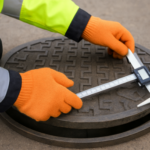
To effectively prevent manhole cover displacement, one must first analyze the mechanical and environmental forces that compromise the interface between the cover and its frame. Traffic-induced vibration is the most persistent threat, particularly in urban zones where heavy logistics vehicles and buses exert constant dynamic stress on the road surface. When a cover does not sit perfectly flush within its frame—often due to a machining tolerance gap exceeding 1mm—the resulting “rocking” effect allows energy to be transferred non-uniformly, gradually wearing down the seating surfaces and loosening the entire assembly. Over time, this mechanical fatigue can cause the cover to “flip” or dislodge entirely when a vehicle passes over it at a specific angle, transforming a functional utility access point into a deadly road obstacle.
Environmental factors, specifically the interplay of water and temperature, play a secondary but equally destructive role in displacement. In regions with significant seasonal variance, freeze-thaw cycles cause the ground to heave and settle, which can shift the manhole chamber and cause the frame to become unlevel with the surrounding asphalt. Furthermore, water infiltration into the bedding layer can erode the supporting mortar, creating voids that lead to subsidence—a condition where the cover sinks below the road grade. When the frame is no longer supported by a solid subgrade, the lateral forces from braking and accelerating vehicles are much more likely to pull the cover out of its seating, highlighting the need for specialized “chimney seals” and high-strength bedding materials to maintain a watertight and stable environment.
Hydraulic Pressure and the Storm Surge Challenge
A specialized form of displacement occurs during extreme rainfall events, where rapid filling of the stormwater drainage system creates powerful internal pressure surges. As sewer lines fill, entrapped air pockets are forced upward through the manhole shafts; if the ventilation is inadequate, the resulting air-cushion effect can generate pressure surges that far exceed the weight of even the heaviest cast iron covers. In severe cases, the combined force of backflowing water and compressed air can literally “blow off” the manhole cover, leaving an open pit that is often hidden beneath floodwaters, creating a lethal trap for motorists and pedestrians. This phenomenon is becoming more frequent as climate change drives intense precipitation that exceeds the design capacity of aging urban drainage networks.
The engineering solution to this hydraulic threat lies in the adoption of specialized pressure-relief access assemblies, such as the “STORMSURGE” system. These assemblies feature a hinged cover with a locking arm that allows the lid to lift up to 16 degrees during a surge event, safely venting the internal pressure and allowing water to overflow without dislodging the cover from its frame. Once the internal pressure returns to normal, the locking arm guides the cover back into its seat, ensuring it remains properly positioned for traffic. For municipalities in flood-prone regions, integrating these self-seating and vented designs is a critical step in resilient infrastructure planning, preventing the hazardous “manhole blow-offs” that characterize modern urban flooding incidents.
| Displacement Cause | Technical Mechanism | Recommended Engineering Solution |
| Traffic Vibration | Rocking due to loose tolerances and dynamic wheel loads. | Precision machining (≤1mm tolerance) and anti-vibration locks. |
| Storm Surges | Internal water/air pressure surges in overloaded sewers. | Pressure-relief assemblies (hinged with locking arms). |
| Bedding Failure | Erosion of bedding mortar and subgrade subsidence. | High-strength mortar (50 N/mm2) and frame anchoring. |
| Machining Wear | Metal-on-metal impact wearing down seating surfaces. | Continuous elastomeric gaskets and rubber seals. |
| Vandalism/Theft | Unauthorized removal for scrap metal value. | Stainless steel bolts, cam locks, or zero-scrap composite materials. |
Precision Engineering: Locking Mechanisms and Gaskets
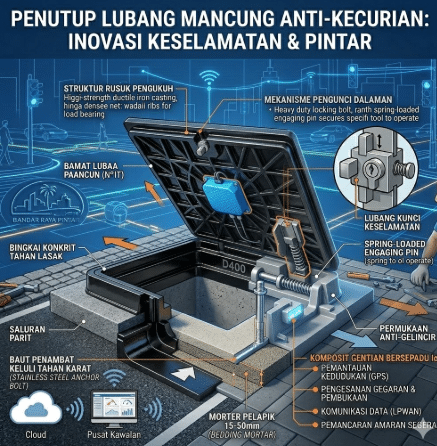
The most direct and effective way to prevent manhole cover displacement is the integration of advanced locking and dampening technologies into the product design. Modern high-security locking systems, such as stainless steel bolts or ductile iron “cam locks,” provide a mechanical bond between the cover and the frame that resists dislodgment from both traffic vibrations and unauthorized tampering. For instance, a spring-bar lock provides quick, reliable retention for frequent access, while high-security patterned bolt heads (like “ManLocks”) ensure that only authorized personnel with specialized tools can open the manhole, effectively securing the underground assets from intruders and accidental movement.
In addition to mechanical locks, the use of elastomeric gaskets and neoprene seals has revolutionized the stability of urban ironwork. These gaskets, often embedded into the frame’s seating surface, act as shock absorbers that eliminate metal-on-metal contact and dampen the resonance caused by passing vehicles. 1 A case study from the Singapore Land Transport Authority demonstrated that a “triple-seal system”—incorporating rubber gaskets, locking bolts, and beveled edges—achieved a 60% reduction in noise and vibration levels at busy intersections. 2 This technology not only prevents the cover from rattling and shifting but also extends the life of the bedding mortar by significantly reducing the impact energy transferred to the surrounding road structure. 3
Installation Best Practices: The 15-50mm Mortar Rule
Even the most advanced manhole cover will fail if the installation process does not adhere to strict civil engineering standards. The stability of the frame depends entirely on the quality of the bedding mortar and the precision with which it is applied. Industry best practices recommend using a high-performance cement mortar with a compressive strength of at least 50 N/mm2, applied at a thickness of 15mm to 50mm. Mortar that is too thin will crack under traffic stress, while mortar that is too thick without proper reinforcement can lead to settlement issues. It is essential that the mortar encapsulates the frame flange entirely, providing a robust, non-moving base that distributes the load evenly across the manhole chamber and into the substructure.
Leveling is the final, critical step in the installation protocol to ensure long-term stability. The manhole frame must be positioned at the exact same height as the finished road surface—ideally using laser-guided leveling tools—to prevent the cover from becoming a “road bump” or a “tripping hazard”. Any protrusion above the grade or recession below it will cause sudden vehicular impacts, which generate lateral shear forces that are the primary cause of frame loosening. For installations in high-traffic carriageways, engineers often recommend anchoring the frame directly to the concrete chamber wall using stainless steel fastener plugs, providing an additional layer of security against displacement in heavy-duty environments.
Monitoring and Maintenance: The Role of IoT
As cities transition toward “Smart Infrastructure,” the prevention of manhole cover displacement is increasingly being managed through real-time digital monitoring. Internet of Things (IoT) sensors, such as the MCM800 or HK35, can be installed directly on the underside of the cover to detect unauthorized lifting, tilting, or even micro-vibrations that indicate a loosening fit. These low-power devices can operate for over three years on a single battery, transmitting data via NB-IoT or GPRS networks to a centralized municipal platform. If a cover is displaced by a vehicle or a flood event, the system immediately alerts maintenance teams, reducing the emergency response time from hours to as little as 15 minutes.
Proactive maintenance schedules remain the backbone of urban resilience, ensuring that minor fitment issues do not escalate into catastrophic failures. Reliable manufacturers recommend a 6- to 12-month inspection cycle, during which quality teams should check for cracked concrete frames, rusted locking devices, and worn elastomeric seals. Regularly cleaning debris from the frame’s seating surfaces is also vital, as accumulated sand and grit can prevent the cover from sitting flush, creating the initial “gap” that leads to rocking and eventual displacement. By combining these traditional maintenance practices with cutting-edge IoT monitoring, municipalities can achieve a “predictive maintenance” model that ensures every manhole cover remains a silent, stable guardian of the city’s streets.
Conclusion: A Proactive Approach to Infrastructure Integrity
In conclusion, preventing manhole cover displacement is not merely a task of tightening bolts; it is a complex engineering discipline that requires a deep integration of material science, hydraulic management, and precision installation. The shift toward high-performance ductile iron and composite materials, combined with advanced anti-vibration locks and elastomeric gaskets, has provided modern cities with the tools necessary to eliminate the risks of rocking and dislodgment. However, the effectiveness of these technological solutions is ultimately dependent on the human element—the commitment to rigorous installation standards and the adoption of proactive, data-driven maintenance models.
As urban density increases and climate-related storm events become more severe, the demand for stable and resilient access solutions will only grow. By prioritizing manufacturers who provide transparent certification, precision-engineered tolerances, and IoT-ready designs, procurement specialists can ensure that their infrastructure stands on a foundation of safety and engineering excellence. Ultimately, a well-secured manhole cover is a testament to a city’s commitment to public safety, transforming a mundane utility entry point into a vital component of a resilient, quiet, and harmonious urban environment.
Frequently Asked Questions (FAQ)
1. Why does my manhole cover rattle every time a car passes over it?
A rattling manhole cover is usually caused by a “loose fit” where the gap between the cover and its frame exceeds 1mm. This is often the result of poor machining tolerances or the accumulation of debris in the frame’s seat. If left unaddressed, the constant metal-on-metal impact will wear down the seating surfaces and can lead to the cover cracking or flipping up under heavy traffic.
2. Can heavy rain really blow off a heavy cast iron manhole cover?
Yes. During extreme rainfall, air pockets can get trapped in rapidly filling sewer lines, creating an air-cushion effect. If the pressure isn’t vented properly, it can build up enough force to overcome the weight of a 50kg-100kg cover, causing it to “blow off” or explode out of the frame. Using pressure-relief assemblies with locking arms can prevent this by safely venting air while keeping the cover attached.
3. What is the most effective way to prevent manhole cover theft?
For metal covers, the most effective prevention is using anti-theft locking mechanisms such as stainless steel bolts, cam locks, or unique patterned bolt heads that require specialized tools. Alternatively, many cities are switching to composite (FRP/SMC) manhole covers, which have zero scrap resale value and therefore significantly reduce the incentive for theft.
4. Is ductile iron better than traditional grey iron for preventing displacement?
Yes. Ductile iron is significantly stronger and more flexible (ductile) than grey iron, which is brittle and prone to cracking under impact. Ductile iron covers can absorb heavy dynamic loads and vibrations from high-speed traffic without deforming, ensuring a tighter, more stable fit over a much longer service life (typically 30+ years).
5. How often should manhole covers be inspected for stability?
For high-traffic urban areas, a 6- to 12-month inspection cycle is highly recommended. Inspections should focus on the integrity of the locking devices, the condition of the elastomeric gaskets, the flatness of the cover, and the state of the surrounding bedding mortar. Early detection of a “rocking” cover can prevent a fatal accident and save the costs of a full frame replacement.