The selection of a reliable manhole cover manufacturer represents a cornerstone decision in the development of resilient urban infrastructure, as these components serve as the critical interface between subterranean utility networks and the surface environment. While often perceived as simple industrial castings or molded composites, manhole covers are, in fact, highly engineered safety devices that must endure decades of extreme physical stress, environmental degradation, and shifting traffic patterns. The global evolution of smart cities and the increasing density of urban populations have elevated the technical requirements for these products, transforming the manufacturer’s role from a basic supplier into a strategic engineering partner. A failure to vet a manufacturer effectively does not merely result in a sub-par product but introduces significant risks including catastrophic structural failure, increased municipal liability, and the long-term economic burden of premature replacement cycles.
The modern procurement landscape for access covers is characterized by a complex interplay of international standards, material innovations, and technical specifications designed to address the unique challenges of the twenty-first century. For civil engineers, municipal authorities, and industrial procurement specialists, identifying a manufacturer with a robust quality management system and a transparent production process is essential for ensuring public safety and infrastructure longevity. Reliability in this sector is defined by a manufacturer’s ability to consistently adhere to stringent protocols such as the EN 124 or AASHTO M306 standards, maintain rigorous batch-level traceability, and provide comprehensive after-sales support.1 As underground utilities—ranging from high-speed fiber optics to high-pressure water mains—become more vital to daily life, the integrity of the covers that protect them becomes a non-negotiable priority for urban resilience.
The Global Regulatory Framework: Navigating Standards and Certifications
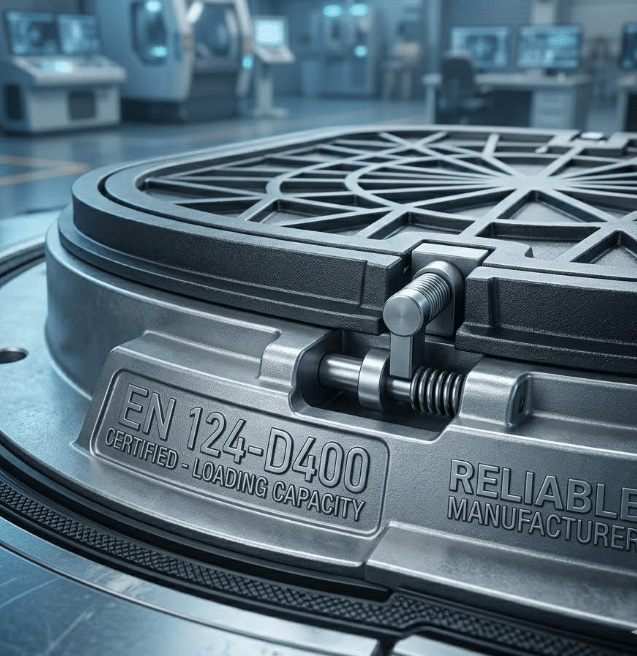
A foundational step in evaluating the reliability of a manhole cover manufacturer is the analysis of their compliance with internationally recognized regulatory frameworks. The European Standard EN 124:2015 is currently the most comprehensive and widely adopted benchmark globally, providing a rigorous classification system based on load-bearing capacity and the intended environment of installation. This standard is divided into six distinct parts, each addressing specific materials such as cast iron, steel, reinforced concrete, and composite materials, ensuring that the engineering requirements are tailored to the physical properties of the substrate.A reliable manufacturer must demonstrate an intimate understanding of these classifications, as the incorrect application of a load class—such as installing an A15 pedestrian cover in a D400 heavy-traffic carriageway—can lead to immediate structural failure and severe safety hazards.
| Load Class | Minimum Test Load (kN) | Typical Installation Environments | Technical Context and Requirements |
| A15 | 15 kN | Pedestrian zones, green spaces, and private gardens | Light-duty; primarily for foot traffic and cyclists. |
| B125 | 125 kN | Footways, pedestrian precincts, and private car parks | Medium-duty; suitable for light vehicular access. |
| C250 | 250 kN | Kerbside channels of roads, extending 0.5m into the carriageway | Designed for gully tops and areas with lateral traffic stress. |
| D400 | 400 kN | Main carriageways of roads, hard shoulders, and motorways | Heavy-duty; the standard for urban and highway traffic. |
| E600 | 600 kN | Docks, container terminals, and heavy industrial areas | High-load; engineered for high wheel-load vehicles. |
| F900 | 900 kN | Aircraft pavements, runways, and heavy airport environments | Extreme-duty; maximum structural integrity required. |
While the EN 124 standard dominates the markets in Europe, the Middle East, and parts of Asia, the North American infrastructure sector relies heavily on the AASHTO M306 standard, developed by the American Association of State Highway and Transportation Officials. This standard emphasizes the performance of ductile iron covers used specifically in highway environments, requiring them to withstand a 40,000-pound proof load without permanent deformation. A global manufacturer’s ability to navigate both EN and AASHTO systems indicates a sophisticated engineering department capable of adapting production techniques to meet regional legal and safety requirements. Furthermore, manufacturers targeting specific emerging markets may also need to comply with national standards such as India’s IS 12592, which places particular emphasis on water-tightness and cover-frame locking to prevent dislodgement in monsoon-prone regions.
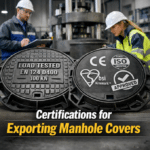
Beyond basic adherence to load ratings, the reliability of a manufacturer is further validated through voluntary third-party certification schemes. Because the EN 124 series has not yet been harmonized in the Official Journal of the European Union, CE marking is not currently applicable, making independent certification by accredited bodies such as BSI (Kitemark), SGS, or Bureau Veritas essential for establishing trade credibility. These independent audits verify that the manufacturer’s quality management system, typically ISO 9001 certified, is consistently applied to every production batch.For procurement specialists, the presence of an independent certification mark on the cover—clearly and durably displayed alongside the product designation and material type—serves as a primary indicator of structural integrity and manufacturer accountability.
Material Science and Engineering: The Building Blocks of Reliability
The material selection process is a definitive indicator of a manufacturer’s technical depth and their ability to match infrastructure needs with physical performance. Traditionally, grey cast iron was the dominant material due to its compressive strength and ease of casting; however, its inherent brittleness and susceptibility to fracture under impact have led to the widespread adoption of ductile iron (spheroidal graphite iron). Reliable manufacturers utilize a precise metallurgical process, adding small amounts of magnesium to the molten iron to create graphite nodules rather than flakes. This microscopic structural change grants the material significantly higher tensile strength and flexibility, allowing ductile iron covers to absorb heavy dynamic loads and resist cracking in high-speed roadway environments where grey iron might fail.
In parallel with metallurgical advancements, the rise of Fiber Reinforced Plastic (FRP) and advanced composites has introduced a new paradigm of lightweight, non-corrosive access solutions. Reliable manufacturers in the composite sector distinguish themselves through the quality of their resin systems and fiberglass reinforcements, ensuring that the resulting products offer an exceptional strength-to-weight ratio.These materials are particularly valuable in environments where traditional iron might degrade, such as coastal regions with high salt exposure or chemical processing plants where corrosive gases are present. Furthermore, the non-conductive nature of composite covers makes them the preferred choice for telecommunications and electrical utilities, as they eliminate the risk of stray voltage incidents and minimize interference with wireless signals.
| Material Property | Ductile Iron (DI) | Composite (FRP/GRP) | Steel (Galvanized/Stainless) |
| Structural Integrity | Exceptional; supports loads up to F900. | High; suitable up to D400 in most designs. | Moderate to High; depends on reinforcement. |
| Corrosion Resistance | Moderate; requires bitumen or epoxy coating. | Excellent; naturally resistant to acids and salts. | Moderate to High; depends on galvanization or grade. |
| Weight & Handling | Heavy; requires lifting equipment for larger classes. | Lightweight; up to 70% lighter than iron. | Moderate; usually lighter than cast iron. |
| Security/Theft | Low; high scrap metal value attracts theft. | High; zero scrap value makes it theft-proof. | Low; scrap value exists. |
| Electrical Safety | Conductive; risk of electric shock. | Non-conductive; safe for electrical pits. | Conductive. |
The durability and lifespan of a manhole cover are not solely dependent on the core material but also on the protective treatments and structural geometry designed by the manufacturer. For ductile iron products, a reliable manufacturer will apply thick, uniform coatings of bitumen or high-performance epoxy to mitigate the risks of oxidation and rust in high-moisture environments. In the case of composites, UV stability is a critical factor; without the integration of specialized UV inhibitors and protective coatings, long-term exposure to sunlight can lead to resin degradation and a loss of mechanical properties.Leading manufacturers conduct artificial aging tests, simulating decades of extreme weather conditions, to validate that their products will maintain structural integrity over a 30- to 50-year service life.
Evaluating Manufacturing Processes: The Foundation of Precision
The reliability of a manhole cover is ultimately forged within the manufacturer’s production facility, where the convergence of raw material quality, thermal management, and machining precision determines the final product’s performance. Advanced manufacturers utilize automated molding lines and CNC (Computer Numerical Control) machining centers to ensure that every casting or molded part adheres to precise dimensional specifications.During the casting phase for iron covers, temperature control is paramount; inconsistent pouring temperatures can lead to porosity, shrinkage, or uneven density, all of which create internal stress points that act as precursors to structural failure under heavy traffic. A reliable manufacturer will have rigorous inspection points at the molding and pouring stages to detect these deviations early in the cycle.
Following the primary forming process, the machining of the cover and frame seating surfaces represents a critical quality differentiator. The fit between a manhole cover and its frame must be exceptionally tight—often with tolerances of less than 1mm—to prevent the movement and “rattling” that generate urban noise and accelerate mechanical wear. Reliable manufacturers employ precision machining to ensure that the seating surfaces are perfectly flat and parallel, distributing the vehicular load evenly across the frame and preventing localized stress concentrations that can lead to edge cracking. This level of precision is especially vital for highway applications, where the dynamic impact of high-speed heavy vehicles can magnify even minor misalignments into major structural risks.
A comprehensive quality control (QC) system is the hallmark of a reliable manufacturer, integrating batch-level traceability and rigorous laboratory testing into every order. This process begins with a chemical composition analysis of each melt or resin batch to confirm that the material properties align with the required standards. Once the products are finished, representative samples must undergo load-bearing tests that simulate real-world conditions, measuring the permanent set and ultimate strength of the cover. For manufacturers specializing in export, the quality system also extends to the final visual check for surface defects, coating uniformity, and dimensional accuracy, ensuring that no cracked or deformed units reach the final construction site.
| QC Stage | Key Inspection Points | Technical Objective |
| Raw Materials | Chemical analysis (Mg content for DI), resin viscosity. | Verify load-bearing standard compliance at the molecular level. |
| Molding/Casting | Temperature logs, mold alignment, pouring speed. | Prevent casting defects like porosity and uneven density. |
| Heat Treatment | Hardness levels, ductility, surface finish. | Enhance mechanical properties and structural resiliency. |
| Machining | Dimensional tolerances, seating flatness, frame fit. | Ensure stable, quiet operation and even load distribution. |
| Performance Test | Proof load tests, impact resistance, slip resistance. | Validate durability under simulated traffic and weather stress. |
| Final Inspection | Coating uniformity, visual defects, packaging integrity. | Ensure product aesthetics and protection for international transit. |
Innovative Solutions: Anti-Theft and Noise Reduction Technologies
As urban environments grow denser and utilities become more sensitive, the definition of a reliable manufacturer has expanded to include the ability to solve localized infrastructure challenges such as theft and noise pollution. The theft of manhole covers for their scrap metal value is a recurring issue in many cities, creating significant safety hazards and financial losses. Reliable manufacturers address this through “theft-deterrent engineering,” which includes the production of composite covers that have zero resale value, or the integration of advanced locking mechanisms into metal designs.16 These systems can range from simple stainless steel bolts and hinges to sophisticated “ManLocks” with unique patterned bolt heads that require specialized tools for access, effectively securing the underground assets from intruders.
Noise pollution caused by vehicles passing over loose manhole covers is a major complaint in residential areas and can even signal the onset of structural failure. A manufacturer’s reliability is highlighted by their adoption of noise-mitigation technologies, such as high-performance elastomeric gaskets or liquid silicone seals. These gaskets, often embedded into the frame’s seating surface, absorb the vibrations and impacts of vehicular traffic, eliminating the metal-on-metal “clacking” sound and providing a quieter urban environment. Leading manufacturers, such as those participating in Singapore’s 2020 urban redesign, utilize a triple-seal system—combining rubber gaskets, locking bolts, and beveled edges—to achieve a 60% reduction in noise levels at busy intersections.
| Noise Control Method | Mechanism of Action | Advantages & Trade-offs |
| Rubber Gaskets | Elastic inserts absorb shock and prevent metal contact. | Simple, low-cost, and effective; requires periodic replacement. |
| Precision Machining | Tight tolerances (≤1mm) minimize cover movement. | High initial engineering cost; provides long-term stability. |
| Spring Buffers | Spring structures convert vibration into elastic energy. | Excellent shock absorption; complex and more expensive to maintain. |
| Noise-Absorbing Coatings | Surface layers (Polyurethane/Silicone) dampen resonance. | Simple construction; durability can be limited in heavy traffic. |
| Smart Monitoring | Sensors detect loose fit and vibration in real-time. | High-tech urban management; provides predictive maintenance data. |
Conducting a Strategic Factory Audit: A Buyer’s Checklist
For major infrastructure projects, the transition from potential supplier to reliable partner is often decided during a comprehensive factory audit. This process allows procurement teams to verify that the manufacturer’s physical facilities and operational cultures match their technical documentation. A reliable manufacturer will maintain a clean, organized layout optimized for material flow and worker safety, as disorganized environments are often correlated with inconsistent product quality.During a plant visit, auditors should prioritize the inspection of the maintenance logs for critical machinery, as calibrated equipment is essential for maintaining the dimensional accuracy required by standards like EN 124.
The audit should also focus heavily on the “Human Element” of the manufacturing process—the training and certification of the workforce. Reliable manufacturers invest in their employees, ensuring that machine operators are properly trained on safety protocols and that QC personnel are qualified to interpret metallurgical data or polymer testing results. Engaging in open-ended interviews with employees can reveal insights into the factory’s actual attitude toward safety and quality, which may differ from the official management narrative. Furthermore, the existence of a clear fire response plan, proper hazardous material storage, and the consistent use of personal protective equipment (PPE) serve as indirect indicators of a mature, stable management system capable of delivering reliable infrastructure products.
| Audit Category | Verification Points for Reliability | Observational Red Flags |
| Facility Hygiene | Clean aisles, marked passageways, debris-free floors. | Obstructed fire exits, oil spills, haphazard material stacking. |
| Process Control | Up-to-date SOPs at workstations, logged parameters. | Workers not following instructions, missing maintenance logs. |
| Raw Material Handling | FIFO principles applied, batch traceability labels. | Unlabeled materials, exposure of resins to sunlight or moisture. |
| Equipment Safety | Functioning machine guards, lockout procedures in place. | Removed guards, bypassed safety sensors, leaking hydraulics. |
| Worker Welfare | PPE usage, available drinking water, adequate lighting. | Lack of hearing protection in high-noise zones, poor ventilation. |
| Emergency Prep | Clearly marked exits, regular drills, accessible extinguishers. | Locked exit doors, expired fire extinguishers, missing signage. |
Economic Analysis: Total Cost of Ownership (TCO) vs. Initial Price
The final evaluation of a manufacturer’s reliability must incorporate an economic perspective that prioritizes the Total Cost of Ownership (TCO) over the initial purchase price. Low-cost manufacturers often achieve their pricing through the use of inferior materials, such as recycled scrap metal with inconsistent alloy ratios, or by bypassing critical heat-treatment and testing phases. While these products may appear compliant on a purchase order, they are prone to premature failure—flexing, sinking, or cracking under traffic—which creates significant long-term costs for municipalities in the form of frequent repairs, emergency replacements, and potential legal claims from road users. A reliable manufacturer, by contrast, provides a product engineered for a decades-long lifespan, reducing the annualized cost of the infrastructure through superior durability and lower maintenance requirements.
The procurement strategy for manhole covers should therefore be viewed as a lifecycle investment. For example, while composite covers may have a higher initial cost than basic cast iron, their lightweight nature significantly reduces installation labor costs and minimizes the long-term risk of worker compensation claims related to manual handling injuries. Similarly, the choice of a manufacturer who offers custom logos, anti-slip patterns, and advanced locking systems can add value to the urban aesthetic and security framework that far outweighs the marginal increase in unit price. By collaborating with a manufacturer who provides engineering adaptations and transparent technical support, procurement specialists can ensure that they are getting the best “value for money” rather than just the lowest bid.
Conclusion: Securing the Urban Foundation
In conclusion, choosing a reliable manhole cover manufacturer is a multifaceted process that requires a deep synthesis of technical compliance, material science, and operational auditing. The integrity of our urban infrastructure rests on these often-overlooked components, making the vetting of a production partner a critical task for ensuring public safety and economic efficiency. A reliable manufacturer is characterized by their unwavering adherence to international standards like EN 124 and AASHTO M306, their investment in advanced manufacturing technologies, and their commitment to transparency through third-party certifications and batch-level traceability.
As cities face the increasing pressures of climate change, rising traffic volumes, and evolving security threats, the role of high-performance access solutions will only grow in importance. By prioritizing manufacturers who innovate in the areas of noise reduction, anti-theft design, and smart infrastructure integration, civil authorities can build more resilient, harmonious, and secure urban environments. Ultimately, the partnership with a reliable manufacturer transforms the procurement of manhole covers from a simple commodity transaction into a foundational investment in the future of the city.
Frequently Asked Questions (FAQ)
1. What are the most important certifications to look for in a manhole cover manufacturer?
A reliable manufacturer should possess ISO 9001 for quality management and ISO 14001 for environmental management. Most importantly, their products should have a Certificate of Conformity (CoC) from an independent, accredited body (e.g., SGS, BVC, BSI) verifying compliance with EN 124 or AASHTO M306 standards.
2. Is ductile iron always better than composite material for manhole covers?
The choice depends on the application. Ductile iron offers unmatched strength for high-speed roadways and airports (up to F900), while composite materials are superior for telecommunications, sidewalks, and corrosive environments due to their lightweight, non-conductive, and theft-proof properties.
3. How can I ensure that the manhole covers will not be noisy once installed?
Prioritize manufacturers who use precision machining to maintain tight tolerances (≤1mm) and who offer covers with integrated elastomeric gaskets or rubber seals. Ensuring that the cover and frame sit perfectly flush with the road surface during installation is also critical for noise prevention.
4. What are the risks of choosing a low-cost manufacturer?
Low-cost covers often use inferior materials and lack proper heat treatment, leading to brittleness, cracking, and deformation under load. This increases the risk of accidents, raises maintenance costs, and can lead to expensive emergency replacements that far exceed the initial savings.
5. What are the standard load classes for highway use?
Under the EN 124 standard, Class D400 is the minimum requirement for main carriageways of roads and motorways. In North America, AASHTO M306 is the relevant standard, requiring a 40,000-pound proof load for highway-grade covers.