Manhole cover and frame systems are critical components of modern urban infrastructure. They provide safe access to underground utilities while ensuring structural integrity, load-bearing capacity, and public safety in roads, sidewalks, and industrial areas.
Although often overlooked, each manhole cover and frame system is engineered with multiple functional components designed to meet specific performance, durability, and safety requirements. Based on practical manufacturing and project experience, this guide explains the basic components of a manhole cover and frame system and how they work together in real-world applications.
What Is a Manhole Cover and Frame System?
A manhole cover and frame system consists of a removable cover and a fixed supporting frame installed at ground level over underground chambers. These systems allow access to utilities such as:
- Sewer and drainage systems
- Telecommunications and electrical networks
- Water supply and gas pipelines
- Industrial inspection chambers
The design must balance accessibility, load resistance, durability, and safety under continuous traffic and environmental exposure.
Why Understanding Manhole Cover Components Matters
Understanding the basic components of a manhole cover and frame system is essential for:
- Proper product selection for different load classes
- Ensuring compliance with EN, ASTM, or AASHTO standards
- Reducing long-term maintenance costs
- Improving safety for pedestrians and vehicles
Each component plays a specific role in overall system performance.
Core Components of a Manhole Cover and Frame System
Manhole Cover
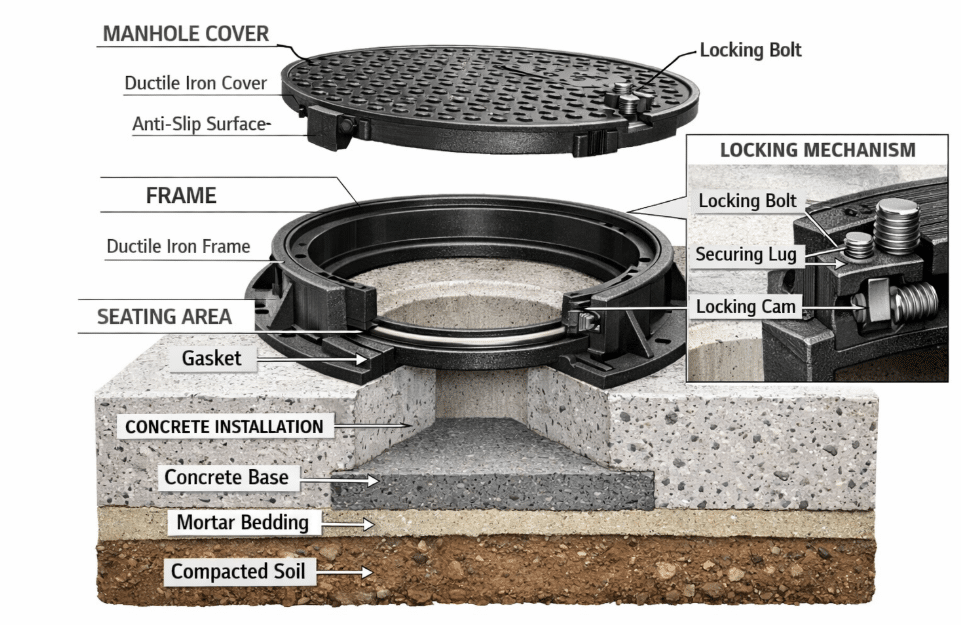
The manhole cover is the visible and removable top component. Its primary function is to seal the opening while allowing periodic access for inspection and maintenance.
Key features include:
- Load-bearing surface
- Anti-slip texture
- Secure seating within the frame
Covers are designed in different shapes, most commonly round or square, depending on application requirements.
Manhole Frame
The manhole frame is a fixed structural component embedded into concrete or pavement. It supports the cover and transfers loads from traffic to the surrounding structure.
Functions of the frame include:
- Providing a stable seating surface for the cover
- Preventing lateral movement
- Maintaining correct elevation with road or pavement level
Frame quality directly affects system longevity and safety.
Seating Area and Contact Surface
The seating area is where the manhole cover rests on the frame. This interface is critical for load distribution and noise control.
Well-designed seating areas help to:
- Prevent rocking or displacement
- Reduce vibration under traffic
- Minimize wear on both cover and frame
Some systems include machined seating surfaces or elastomer inserts for improved performance.
Locking and Fixing Mechanisms
Locking systems are used to secure the manhole cover to the frame, especially in high-traffic or public-access areas.
Common locking mechanisms include:
- Bolt-down systems
- Hinged covers with safety locks
- Key-operated locking devices
These features enhance safety by preventing unauthorized access and accidental displacement.
Hinges (Optional Component)
Hinges are optional but commonly used in heavy-duty or safety-critical applications.
Benefits of hinged manhole covers include:
- Reduced risk of cover removal accidents
- Controlled opening and closing
- Improved safety for maintenance personnel
Hinges are often required in industrial zones or areas with high pedestrian traffic.
Gaskets and Sealing Elements
Gaskets are installed between the cover and frame to improve sealing and performance.
Their functions include:
- Preventing water ingress
- Reducing noise caused by traffic vibration
- Improving overall stability
Elastomer or rubber gaskets are commonly used in high-quality systems.
Ventilation and Drainage Features
Some manhole covers include integrated ventilation or drainage openings.
These features allow:
- Gas release from underground chambers
- Water drainage to prevent pooling
- Pressure equalization
Ventilated designs are commonly used in sewer and utility networks.
Material Selection for Manhole Cover Components
Ductile Iron
Ductile iron is widely used due to its:
- High strength and impact resistance
- Excellent load-bearing capacity
- Long service life
It is suitable for roads, highways, and industrial areas.
Cast Iron
Cast iron offers good compressive strength and is commonly used in low-traffic applications such as sidewalks or green areas.
Composite Materials
Composite manhole covers are increasingly used for:
- Lightweight handling
- Corrosion resistance
- Electrical insulation
They are ideal for telecom and utility installations.
Steel and Stainless Steel
Steel components are used in special industrial or architectural applications requiring high strength or corrosion resistance.
Load Classes and Performance Requirements
Manhole cover and frame systems are designed according to load classification standards such as:
- EN 124 (Europe)
- AASHTO M306 (North America)
Load classes range from pedestrian areas to heavy-duty traffic zones, ensuring the system can withstand expected loads safely.
Anti-Slip Surface Design
Surface texture is a critical safety feature.
Anti-slip designs may include:
- Raised patterns
- Textured finishes
- Special coatings
These features reduce the risk of slipping in wet or icy conditions.
Installation Interface with Pavement
Proper integration with surrounding pavement is essential.
Key considerations include:
- Correct frame height alignment
- Secure anchoring in concrete
- Even load transfer
Poor installation can compromise even high-quality components.
Durability and Environmental Resistance
Manhole cover components must resist:
- Corrosion
- Freeze-thaw cycles
- Chemical exposure
Material choice and protective coatings play a major role in long-term durability.
Maintenance Considerations
Well-designed manhole cover and frame systems reduce maintenance requirements.
Maintenance typically involves:
- Visual inspection for wear or damage
- Checking seating surfaces
- Ensuring locking mechanisms function properly
Routine inspection extends service life and maintains safety.
Common Design Variations
Manhole cover systems may vary by:
- Shape (round, square, rectangular)
- Frame depth and profile
- Locking and hinge options
Design variations allow customization for specific project needs.
Real-World Application Experience
In municipal and infrastructure projects, systems with properly engineered frames, stable seating areas, and secure locking mechanisms consistently perform better under long-term traffic loads.
Experience shows that investing in quality components reduces lifecycle costs and safety incidents.
How to Choose the Right Manhole Cover and Frame System
When selecting a system, consider:
- Load class requirements
- Environmental conditions
- Installation environment
- Compliance with local standards
Working with experienced manufacturers ensures proper design and material selection.
Conclusion
A manhole cover and frame system is more than a simple access point. Each component—from the cover and frame to seating surfaces and locking mechanisms—plays a vital role in safety, durability, and performance.
Understanding these basic components helps engineers, contractors, and project owners make informed decisions and ensure reliable infrastructure systems.