Effective stormwater management is one of the foundational elements of modern urban planning. As cities grow denser and climate patterns become increasingly unpredictable, the need for reliable surface drainage systems has intensified. Among the essential components of these systems are drainage grates. While often overlooked, the applications of drainage grates in public spaces directly impact pedestrian safety, infrastructure durability, and environmental sustainability. From sidewalks and parks to transportation hubs and commercial plazas, drainage grates perform both structural and hydraulic functions. This article explores how drainage grates are applied across various public environments, the materials commonly used, regulatory considerations, and how municipalities can optimize their selection for long-term performance.
The Role of Drainage Grates in Urban Infrastructure
Drainage grates serve as protective covers placed over stormwater channels, trench drains, and catch basins. Their primary function is to allow water to flow into underground drainage systems while preventing debris accumulation and ensuring pedestrian and vehicular safety. In public spaces, these grates must balance hydraulic efficiency with structural integrity. Properly designed drainage grates reduce surface flooding, minimize slip hazards, and protect surrounding pavement from erosion. In addition, they contribute to maintaining accessibility standards by ensuring smooth transitions for wheelchairs, bicycles, and strollers. Their integration into public infrastructure supports both safety compliance and urban resilience strategies.
Applications of Drainage Grates in Sidewalks and Pedestrian Zones
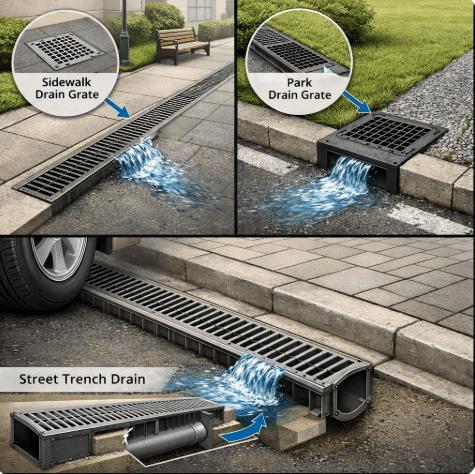
One of the most common applications of drainage grates in public spaces is within sidewalks and pedestrian corridors. In these areas, drainage grates must prioritize safety, anti-slip performance, and aesthetic integration. Grate openings are carefully engineered to prevent high-heel entrapment and comply with accessibility guidelines. Materials such as ductile iron and composite are frequently selected due to their durability and corrosion resistance. In pedestrian-heavy environments, drainage grates must also withstand repetitive load cycles from foot traffic and occasional service vehicles. Proper installation ensures stable placement, preventing movement that could create trip hazards.
Use in Parks and Recreational Areas
Public parks and recreational spaces require drainage solutions that manage stormwater effectively without disrupting the natural landscape. Drainage grates installed in these environments often serve linear trench systems along pathways, sports courts, playgrounds, and landscaped zones. In addition to structural performance, corrosion resistance is particularly important due to constant exposure to moisture and organic debris. Composite and galvanized steel grates are common choices. In these settings, drainage grates contribute to soil protection, reduce waterlogging, and help maintain safe, dry surfaces after rainfall events.
Applications in Roads and Urban Streetscapes
Drainage grates in roadways and streetscapes are subjected to heavier loads compared to pedestrian zones. These installations must comply with load classification standards such as EN 124 or equivalent regulations, ensuring they can withstand vehicular traffic. In busy city streets, properly positioned drainage grates prevent water accumulation that could cause hydroplaning or accelerate pavement degradation. The structural design of grates in these applications emphasizes load distribution, fatigue resistance, and secure locking mechanisms. Their correct specification directly influences road longevity and public safety.
Drainage Grates in Public Transportation Hubs
Airports, train stations, bus terminals, and metro entrances represent high-risk zones for water accumulation due to large impermeable surfaces. The applications of drainage grates in public spaces such as transportation hubs are critical for maintaining operational continuity. In these locations, drainage grates must handle both heavy pedestrian traffic and service vehicles. Anti-slip surfaces and high load-bearing capacity are mandatory. Additionally, aesthetic considerations often influence grate design to align with architectural themes. Efficient drainage in these areas minimizes disruption, reduces maintenance costs, and enhances user experience.
Commercial Plazas and Mixed-Use Developments
Modern commercial developments integrate drainage grates into plaza designs, shopping centers, and mixed-use properties. In these environments, grates must combine functional performance with visual appeal. Architectural trench drains often incorporate decorative patterns while maintaining optimal water flow capacity. Stainless steel and coated ductile iron are commonly used materials due to their balance between durability and appearance. Beyond aesthetics, these drainage systems protect underground parking areas and building foundations from water intrusion, supporting long-term structural stability.
Material Considerations for Public Space Applications
The selection of materials significantly influences the performance of drainage grates in public environments. Ductile iron offers superior strength and is widely used in heavy-duty applications. Steel grates provide high tensile strength but may require protective coatings against corrosion. Composite materials offer lightweight handling and corrosion resistance, making them suitable for pedestrian zones. Each material must be evaluated based on environmental exposure, expected load conditions, maintenance capacity, and regulatory compliance. A strategic material choice reduces lifecycle costs and ensures sustainable infrastructure performance.
Safety, Accessibility, and Regulatory Compliance
Public space drainage grates must adhere to strict safety and accessibility guidelines. Opening sizes, surface textures, and load classifications are regulated to prevent accidents and ensure universal access. Municipal authorities often require compliance with national or international standards before approving installation. Regular inspections and maintenance further ensure continued performance. Integrating drainage grates into urban design requires coordination between engineers, architects, and planners to achieve both compliance and functional excellence.
Sustainability and Climate Adaptation
As climate change increases rainfall intensity in many regions, urban drainage systems must adapt accordingly. The applications of drainage grates in public spaces now extend beyond basic runoff control to supporting broader stormwater management strategies. Properly designed systems can facilitate water harvesting, reduce urban heat island effects, and mitigate flooding risks. Durable materials with long service lives also reduce environmental impact by minimizing replacement frequency. Sustainable drainage solutions are becoming integral to resilient city planning.
Conclusion
The applications of drainage grates in public spaces encompass far more than simple water removal. These components support public safety, infrastructure durability, accessibility compliance, and climate resilience. Whether installed in sidewalks, parks, streets, transportation hubs, or commercial plazas, drainage grates must be carefully selected based on load requirements, environmental exposure, and regulatory standards. A strategic approach to design and material selection ensures long-term functionality while enhancing urban aesthetics. For municipalities, contractors, and developers, investing in high-quality drainage grates is a critical step toward building safer and more sustainable public environments.
Frequently Asked Questions (FAQ)
1. What are the main applications of drainage grates in public spaces?
They are used in sidewalks, parks, roads, transportation hubs, and commercial plazas to manage stormwater safely.
2. Which material is best for public space drainage grates?
Ductile iron is preferred for heavy traffic, while composite and steel are suitable for lighter-duty areas.
3. Do drainage grates require load classification?
Yes. They must comply with load standards such as EN 124 for safety and durability.
4. How do drainage grates improve safety?
They prevent water accumulation, reduce slip hazards, and protect pedestrians and vehicles.
5. Are decorative drainage grates structurally reliable?
Yes, when properly engineered, decorative grates meet the same structural standards as standard designs.