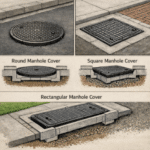
Manhole covers are ubiquitous features of modern urban infrastructure, providing essential access to underground utility networks such as sewers, water mains, telecommunications, and electrical systems. However, despite their fundamental utility, they can become severe safety hazards when their surfaces are improperly designed or excessively worn, particularly under adverse weather conditions. Rain, snow, ice, and even spilled motor oil can transform a standard metal utility lid into an incredibly slick surface, posing a significant risk to pedestrians, cyclists, and motorcyclists. Consequently, the anti-slip design of manhole covers has evolved from an afterthought into a critical engineering requirement governed by strict safety standards. By prioritizing skid resistance, municipalities and urban planners can drastically reduce the frequency of slip-and-fall accidents and loss-of-control vehicular crashes, ultimately creating a much safer, more accessible, and user-friendly environment for all individuals navigating the bustling streetscape.
The Core Mechanics of Skid Resistance in Infrastructure
Understanding the mechanics behind slip resistance is entirely fundamental to evaluating the effectiveness of the anti-slip design of manhole covers. In the realm of surface engineering, skid resistance is largely determined by the coefficient of friction between the manhole cover’s surface and the object coming into contact with it, whether that is a rubber tire or a rubber-soled shoe. Engineers measure this frictional property using standardized equipment, most notably the British Pendulum Tester, which calculates a Pendulum Test Value (PTV) or Slip Resistance Value (SRV). To achieve a safe PTV, a surface must possess a careful balance of macro-roughness, which provides drainage for bulk water and prevents hydroplaning, and micro-roughness, which constitutes the fine-scale texture that physically grips the tire tread or footwear. When a manhole cover lacks adequate micro-roughness—often the result of decades of heavy traffic polishing the metal—it inevitably fails to provide sufficient grip when wet, regardless of how prominent its larger, macro-level patterns might appear to the naked eye.
Traditional vs. Modern Anti-Slip Design Paradigms
Historically, the approach to creating safe utility covers was relatively rudimentary, relying on simple raised geometric shapes such as chequers, diamonds, or basic concentric rings cast into heavy, solid iron. While these traditional patterns offered a marginal improvement over completely smooth, flush metal plates, they were fundamentally flawed in their long-term efficacy. Over time, the repeated impact and friction generated by the tires of heavy commercial vehicles rapidly polished these raised sections until they were dangerously smooth, completely neutralizing their intended anti-slip properties. In stark contrast, the modern anti-slip design of manhole covers employs highly complex, computer-generated topologies. Contemporary engineers utilize sophisticated modeling software to design multi-directional tread patterns that deliberately mimic the water-displacing characteristics of high-performance automotive tires. These modern designs proactively channel water away from the precise point of contact, ensuring that a persistent, dry contact patch is maintained even during torrential downpours, thereby offering vastly superior and far more durable skid resistance.
Material Innovations for Enhanced Surface Grip
While the physical geometry of the surface pattern is undeniably critical, the underlying material composition of the utility lid plays an equally pivotal role in the overall success of the anti-slip design of manhole covers. For many decades, traditional grey cast iron was the undisputed industry standard, but it is notoriously prone to polishing to a glass-like finish under continuous vehicular wear. Today, the industry has heavily shifted toward ductile iron, which not only provides substantially greater tensile strength and resistance to catastrophic cracking but can also be cast with much sharper, more resilient micro-textures that retain their frictional edge longer. Furthermore, the advent of advanced composite materials, such as heavy-duty fiberglass-reinforced polymers and specialized resins, has revolutionized the industry. These high-tech composite covers are often engineered with abrasive aggregates integrated directly into the material matrix itself. This means that as the surface layer slowly wears away over years of use, fresh, sharp aggregate particles are continually exposed, providing a permanent, self-renewing anti-slip surface that practically never loses its grip.
Engineering the Perfect Water Displacement Pattern
The concept of hydroplaning—where a layer of water builds up between a moving object and the ground, resulting in a total loss of traction—is a primary enemy of the anti-slip design of manhole covers. To combat this phenomenon, engineers meticulously design the surface topography to facilitate rapid and efficient water displacement. This is achieved by creating an intricate network of raised nodes interspersed with specifically angled recessed channels. When a pedestrian’s shoe or a bicycle’s tire presses down onto the cover, the localized pressure immediately forces the trapped water into these recessed channels and away from the critical gripping surface. The geometric shape of the raised nodes is also carefully calculated; sharp, multi-faceted angles are generally preferred over smooth, rounded bumps because they are highly effective at cutting through the surface tension of the water film. This ensures that the primary contact points remain relatively dry and capable of generating the necessary friction to prevent a dangerous slip or slide.
Retrofitting and Surface-Applied Anti-Slip Coatings
Municipalities face a massive logistical and financial challenge when dealing with thousands of existing, older manhole covers that have become dangerously slippery but are otherwise structurally sound. Completely replacing all of these utility lids is often prohibitively expensive and disruptive to urban traffic flow. As a highly effective and economical alternative, road maintenance crews frequently employ retrofitting techniques utilizing heavy-duty, surface-applied anti-slip coatings. This specialized process typically involves thoroughly cleaning and shot-blasting the polished metal surface to create a bonding profile, followed by the application of a robust, two-part epoxy or polyurethane resin binder. Before this high-strength resin fully cures, extremely hard, angular aggregates—such as calcined bauxite, aluminum oxide, or specialized quartz sand—are heavily broadcast over the wet binder. Once cured, this top-tier coating provides an exceptional level of skid resistance that often drastically exceeds international safety standards, effectively extending the safe operational lifespan of the existing infrastructure by several years.
The Disproportionate Impact on Vulnerable Road Users
When evaluating the critical necessity of the anti-slip design of manhole covers, one must closely consider its profound impact on vulnerable road users, who face disproportionate risks compared to occupants of four-wheeled vehicles. For a car, a momentary loss of traction on a single slippery utility lid might result in a minor, barely noticeable twitch of the steering wheel. However, for a cyclist or a motorcyclist leaning into a corner, hitting a slick, polished manhole cover can result in an instantaneous and catastrophic loss of lateral grip, inevitably leading to severe, life-altering crashes. Similarly, pedestrians, particularly the elderly, young children, or individuals relying on mobility aids like canes and walkers, are incredibly susceptible to devastating injuries from slips and falls. A sudden transition from high-friction asphalt to low-friction wet metal catches pedestrians completely off guard, making it an absolute necessity for urban planners to prioritize high-friction utility covers in all crosswalks, sidewalks, and designated bike lanes to protect these at-risk populations.
International Standards and Safety Regulations
To guarantee a baseline level of public safety, the anti-slip design of manhole covers is heavily regulated by stringent international engineering and manufacturing standards. In Europe, the prevailing standard is EN 124, which not only categorizes manhole covers by their ultimate load-bearing capacity but also specifically mandates strict minimum requirements for surface patterning and skid resistance depending on the intended installation location. Similar comprehensive frameworks exist globally, such as the AASHTO guidelines in the United States and the AS 3996 standard in Australia. These rigorous regulations dictate that covers placed in dedicated pedestrian walkways or high-speed vehicular carriageways must meet significantly higher Pendulum Test Values (PTV) than those situated in infrequently accessed green spaces. Adherence to these strict standards is not merely a matter of engineering best practices; it is a critical legal necessity. Municipalities and private property owners can face severe legal liability and massive financial settlements if it is proven that they negligently installed or failed to maintain utility covers that did not meet the legally mandated anti-slip criteria.
Maintenance, Wear, and Long-Term Performance Monitoring
The initial installation of a highly engineered, slip-resistant utility lid is merely the first step in a continuous, long-term safety strategy; ongoing maintenance and proactive performance monitoring are absolutely crucial. Even the most robust, well-designed anti-slip design of manhole covers will inevitably experience degradation over time when subjected to the relentless daily grinding of heavy commercial trucks, buses, and general vehicular traffic. Therefore, responsible urban asset managers must implement strict, regular inspection schedules. These protocols typically involve dispatching trained technicians equipped with portable friction-testing devices to periodically measure the real-world surface grip of installed covers, particularly those located in known high-risk zones like steep gradients, sharp braking areas, and busy pedestrian crossings. When a cover’s skid resistance falls below the legally mandated safety threshold, it must be promptly scheduled for either an aggressive abrasive surface treatment, an application of an epoxy aggregate coating, or a complete structural replacement to ensure continuous public safety.
Conclusion
In conclusion, the anti-slip design of manhole covers represents a fascinating and absolutely vital intersection of materials science, urban planning, and public safety engineering. What might appear to the average citizen as a simple, mundane piece of urban metalwork is, in reality, a highly engineered surface designed to save lives and prevent devastating injuries. By moving away from smooth, easily polished cast iron and embracing advanced composite materials, intricate water-displacing topographies, and heavy-duty aggregate coatings, modern infrastructure has become vastly safer for everyone. As our urban centers continue to grow and become more congested, the commitment to rigorous maintenance, strict adherence to international safety standards, and continuous innovation in surface friction technology will remain paramount. Ensuring that every utility lid under our feet and tires provides unwavering grip is a fundamental responsibility in the ongoing mission to build safer, more accessible, and truly modern cities.
Frequently Asked Questions (FAQ)
1. What exactly makes a manhole cover slippery?
A manhole cover primarily becomes slippery due to a combination of material properties, surface wear, and environmental factors. Traditional cast iron covers are highly susceptible to becoming polished smooth over time by the relentless friction of vehicle tires. When this smooth, polished metal is exposed to lubricating elements like rainwater, melting snow, ice, or spilled automotive fluids, it loses almost all of its micro-roughness. Without this micro-roughness, tires and shoes cannot physically grip the surface, leading to a drastically reduced friction coefficient and a highly dangerous, slippery condition.
2. How do engineers measure the slip resistance of a manhole cover?
Engineers typically measure slip resistance using an internationally recognized instrument known as the British Pendulum Tester. This specialized device features a swinging mechanical arm with a standardized rubber slider attached to the end. The arm is released, and the rubber slider strikes the surface of the manhole cover. The device measures the precise amount of energy lost as the rubber drags across the surface, providing a numerical score called the Pendulum Test Value (PTV). A higher PTV clearly indicates better friction and a substantially lower risk of slipping for pedestrians and vehicles.
3. Are composite manhole covers better for anti-slip purposes than metal ones?
Generally speaking, yes, high-quality composite manhole covers offer superior long-term anti-slip performance compared to traditional un-coated metal covers. Composite lids, often made from advanced fiberglass and heavy-duty resins, can be manufactured with abrasive, grit-like aggregates permanently embedded throughout the entire depth of the material. Because this abrasive material is not just a surface coating but part of the structural matrix, the cover maintains a consistently high level of friction even as the top layers slowly wear away over decades of heavy use.
4. Can an old, smooth manhole cover be fixed without replacing it?
Yes, municipalities absolutely can remediate older, polished manhole covers without resorting to the expensive and disruptive process of full replacement. The most common and effective method is retrofitting the existing cover with a specialized anti-slip coating. This rigorous process involves thoroughly cleaning and shot-blasting the metal to create a rough texture, applying a highly durable epoxy or polyurethane binder, and completely covering the wet resin with extremely hard, angular aggregates like calcined bauxite. Once dry, this creates an incredibly grippy surface that significantly extends the safe life of the cover.
5. What is the role of the surface pattern in the anti-slip design of manhole covers?
The intricate surface pattern on a modern manhole cover is highly engineered to perform a role very similar to the tread on a car tire. Its primary function is to quickly channel bulk water away from the precise point of contact between a shoe or tire and the cover itself. By utilizing a specifically designed grid of raised nodes and recessed channels, the pattern breaks the surface tension of the water and prevents a lubricating film from forming. This prevents the highly dangerous phenomenon of hydroplaning and ensures the physical surface can generate adequate friction.